

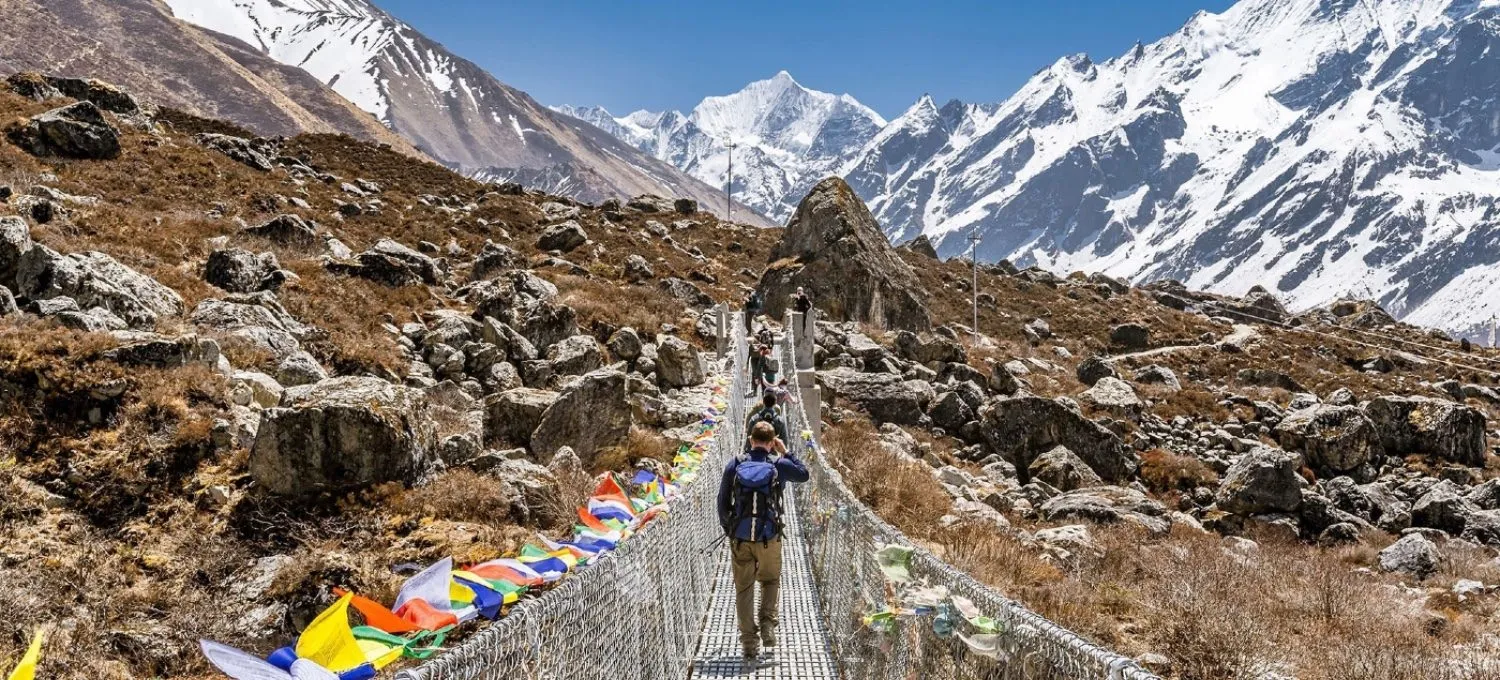
Glacier Safari Treks requires valid Nepal trekking insurance for every client before departure. This is not administrative caution. Helicopter evacuation from altitude in Nepal costs between EUR 2,580 and EUR 4,295 for a straightforward rescue and considerably more when the pickup point is above 5,000 metres or when weather delays accumulate. Without insurance that specifically covers high-altitude rescue, that cost falls entirely on the trekker at the moment they are least equipped to manage it.
The insurance requirements for Nepal trekking are specific enough that standard travel insurance and credit card coverage fail a significant proportion of trekkers who assume they are covered. This page covers what is required, what does not work, and how to get the right coverage before you arrive.
Mandatory Insurance Requirements for Trekking in Nepal
1. Helicopter Evacuation Coverage Requirements
Your policy must include helicopter evacuation coverage with a minimum limit of EUR 15,000. Additionally, the total coverage limit for medical expenses abroad combined with repatriation must be a minimum of EUR 100,000. The policy must cover rescue from the specific altitude of your trek, not just medical treatment once you reach a hospital. A policy that covers hospitalisation but not the rescue flight from altitude is inadequate for Nepal.
The insurance company must have a direct billing arrangement with rescue operators or must be willing to issue a guarantee of payment before the rescue helicopter departs. Rescue operators in Nepal do not dispatch on the basis of a promise to claim later. Payment or a verified guarantee comes first.
2. Altitude Coverage Based on Your Trek
Altitude coverage requirements vary by route.
- Everest Base Camp requires coverage to at least 5,545 metres.
- Thorong La (Annapurna Circuit) requires coverage to 5,416 metres.
- Tsergo Ri (Langtang) requires coverage to 4,984 metres.
- Manaslu Circuit requires coverage to 5,160 metres at Larkya La.
- Upper Mustang routes require coverage to at least 4,000 metres.
Verify the maximum altitude figure in your policy document, not in the marketing materials. Some policies list a headline altitude that does not apply to evacuation coverage.
3. Acute Mountain Sickness (AMS) Coverage
AMS coverage must be explicitly stated in the policy. A policy that covers general medical emergencies does not automatically cover AMS-related evacuation. AMS, high-altitude pulmonary oedema (HAPE), and high-altitude cerebral oedema (HACE) are the primary medical emergencies requiring helicopter evacuation on Nepal’s high-altitude routes, and each must be listed as a covered condition.
Some policies exclude AMS on the basis that the trekker knowingly ascended to altitude, classifying it as a foreseeable risk rather than an emergency. Read the exclusions before purchasing.
4. Mountain Rescue vs Medical Repatriation
Mountain rescue and medical repatriation are two separate coverage categories. Mountain rescue covers the cost of extracting you from the mountain and delivering you to a medical facility. Medical repatriation covers the cost of returning you to your home country for treatment once you have been stabilised.
Both are necessary. The costs are different, and the triggers are different. A rescue from 5,000 metres to Kathmandu is a rescue claim. A medical flight from Kathmandu to Paris is a repatriation claim. Your policy needs to cover both at adequate limits.
5. Insurance Certificate Requirements
GST requires a physical or digital insurance certificate before your trek departs. The certificate must show your full name, policy number, coverage dates, altitude coverage limit, helicopter evacuation coverage, and the emergency contact number for your insurer’s 24-hour assistance line.
A screenshot of a payment confirmation does not constitute an insurance certificate. A policy summary document that does not include the emergency assistance number is inadequate. Submit the full policy document and the certificate as separate files.
Why Credit Card Insurance Fails for Nepal Trekking
Problems with Visa Premier and Mastercard Gold for Nepal Trekking Insurance
Visa Premier and Mastercard Gold cards typically include travel insurance as a cardholder benefit. These policies are designed for standard travel risks: cancelled flights, lost luggage, and medical emergencies at sea level or in urban environments. They consistently fail on several specific points for Nepal trekking.
- Altitude Limits: Altitude limits in Visa Premier and Mastercard Gold policies are typically set at 2,000 to 3,000 metres for adventure activities. Everest Base Camp is at 5,364 metres. The coverage ceiling is below the elevation at which the most significant risks on a Nepal trek occur.
- Reimbursement Model: Rescue coverage, where it exists in these policies, often requires the cardholder to arrange and pay for the rescue and then submit a claim for reimbursement. Nepal rescue operators require guaranteed payment before dispatch. The reimbursement model does not satisfy this requirement.
American Express Insurance Limitations for Trekking Coverage Requirements
American Express premium card insurance is more comprehensive than standard bank card coverage, but still presents specific problems for Nepal trekking. The altitude limit varies by card tier. The adventure sports exclusions in many American Express policies exclude trekking above a specified altitude or on routes classified as mountaineering rather than trekking. Everest Base Camp is classified differently by different insurers, and that classification determines coverage.
American Express policies also vary significantly by country of card issuance. A French-issued American Express Platinum operates under different terms than a UK-issued equivalent. The coverage that applies to your specific card requires direct verification with American Express, not an assumption based on the general card reputation.
Credit Card Insurance vs Specialised Trek Insurance in Nepal
The fundamental difference is that credit card insurance is designed to cover standard travel risks efficiently and cheaply as a cardholder benefit. Specialised trekking insurance is designed to cover high-altitude rescue, AMS evacuation, and mountain-specific emergencies as its primary function.
Credit card policies are not inadequate by accident. They are adequate for their intended purpose and inadequate for Nepal’s high-altitude trekking environment because that environment is outside their design parameters.
What Type of Insurance Actually Works
A specialised adventure or trekking insurance policy from a provider with direct experience in Nepal rescue operations. The policy must explicitly cover helicopter evacuation, name the altitude of your specific trek as within scope, list AMS and related altitude illnesses as covered conditions, and include a 24-hour emergency assistance line that operates in French or English and has established relationships with Kathmandu-based rescue operators.
Best Insurance Providers for French Trekkers
- Chapka – Cap Aventure: Chapka’s Cap Aventure policy is designed for adventure travel and covers trekking in Nepal with helicopter evacuation to 6,000 metres as standard. The policy includes AMS coverage, direct payment to rescue operators, and French-language emergency assistance. It covers multiple activities without requiring separate declarations for each, which suits trekkers who combine hiking with other activities in Nepal.
- Europ Assistance – Trek and Expedition: Europ Assistance operates one of the largest international assistance networks and has established direct billing relationships with Kathmandu-based rescue operators. The Trek and Expedition policy covers helicopter evacuation, AMS, medical repatriation, and trip cancellation. The 24-hour assistance line operates in French and has specific Nepal desk experience. Claims are settled directly with service providers rather than requiring upfront payment and reimbursement in most cases.
- Club Alpin Français – Toits du Monde: The Club Alpin Français membership insurance through the Toits du Monde policy is designed specifically for mountain activities. It covers rescue and evacuation to high altitudes, includes AMS as a standard covered condition, and is recognised by rescue operators in Nepal. The CAF membership requirement means the policy is available to members only, but the coverage terms are among the most specific to high-altitude trekking available to French trekkers.
- ACS Assurance – Globe PVT/Partner: ACS Assurance Globe Partner provides comprehensive coverage for trekking in Nepal, including helicopter evacuation, altitude illness, and medical repatriation. The policy is available without a membership requirement and covers trekkers up to specified age limits that are higher than many comparable products. The emergency assistance operates in French and has direct relationships with Kathmandu rescue coordination centres.
Nepal Trekking Insurance Cost Breakdown
Average Insurance Cost by Trek Duration
Insurance cost for Nepal trekking scales with duration, altitude, and the age of the trekker. As a general reference for French trekkers purchasing specialised adventure insurance:
- A 10 to 14-day trek at moderate altitude (Langtang or Annapurna Base Camp) costs between EUR 80 and EUR 150 for a trekker under 45.
- A 14 to 21-day trek at high altitude (Everest Base Camp or Annapurna Circuit) costs between EUR 120 and EUR 200 for the same demographic.
Trekkers above 55 typically pay 30 to 50 per cent more for equivalent coverage due to underwriting age adjustments. Extended permits above 30 days increase cost proportionally, and some providers require medical declarations above certain age thresholds.
These figures cover the specialised trekking insurance component. If you are purchasing a comprehensive policy that also covers trip cancellation, flights, and personal equipment, the total cost is higher.
Most Popular Insurance Choice Among GST Trekkers
Among GST’s French-speaking clients, Chapka Cap Aventure and Europ Assistance Trek and Expedition are the most frequently submitted policies at verification. Both satisfy GST’s coverage requirements consistently without additional documentation requests. Club Alpin Français members who carry the Toits du Monde policy also meet requirements without exception.
Why Insurance Is Worth the Cost in Nepal
A helicopter rescue from Everest Base Camp to Kathmandu costs between EUR 3,440 and EUR 5,150 under normal conditions. If the weather requires multiple attempts or if the pickup requires a high-altitude specialist aircraft, that figure rises. Medical treatment in Kathmandu for HAPE or HACE, followed by medical repatriation to France on a medical flight, can total EUR 25,770 to EUR 68,720. A EUR 150 insurance premium covers this exposure. The cost comparison requires no further elaboration.
How to Get Trekking Insurance for Nepal (Step-by-Step)
Step 1 – Identify Your Trek Altitude
Before purchasing insurance, confirm the maximum altitude of your specific route with GST. The altitude figure you provide to your insurer must match or fall below the maximum altitude stated in your policy. Purchasing a policy with a 5,000 metre altitude limit for an Everest Base Camp trek that reaches 5,545 metres at the Kala Patthar viewpoint leaves a 545 metre gap that may void your evacuation coverage.
Step 2 – Choose the Right Insurance Plan
Select a specialised adventure or trekking insurance policy from a provider whose documentation explicitly states helicopter evacuation coverage, AMS coverage, and the altitude limit applicable to evacuation claims. Read the exclusions before purchasing, specifically the adventure sports exclusions and the altitude-related exclusions.
Contact the insurer directly if the policy wording is ambiguous on any of these points. Get the clarification in writing.
Step 3 – Purchase and Download Your Certificate
After purchasing, download the full policy document and the insurance certificate as separate files. The certificate must include your name, policy number, coverage dates, emergency assistance contact number, and the summary of key coverage limits. If the certificate does not include the emergency assistance number, request a separate document from the insurer that does.
Step 4 – Submit Insurance Certificate to GST
Submit your insurance certificate to GST at least two weeks before your trek departure date to allow time for verification. If GST identifies a coverage gap or documentation issue, two weeks provides enough time to resolve it before departure. Submitting the day before departure does not.
Step 5 – GST Verification and Approval Process
GST reviews the submitted documents against the coverage requirements for your specific route. Verification confirms altitude coverage, evacuation coverage, AMS coverage, and the emergency assistance contact. If the documentation is complete and the coverage meets requirements, GST issues confirmation within 48 hours. If additional documentation is required, the coordinator contacts you directly with the specific requirement.
Contact Glacier Safari Treks for Trekking in Nepal
GST Insurance Coordinator Contact
Submit insurance certificates and direct insurance-related queries to GST’s insurance coordinator before your trek departure. Contact details are available through the main GST inquiry page for trekking with Glacier Safari Treks. Mark your submission with your name, trek route, and departure date so the coordinator can match it to your booking file.
Emergency Numbers During Your Trek
Your GST guide carries the emergency contact numbers for your insurer and for Kathmandu-based rescue coordination. Before departure, confirm that you have your insurer’s 24-hour emergency assistance number saved independently on your phone and written in your pack. Do not rely on your guide’s phone as the only location for this number.
Important Documents to Carry
Carry physical copies of the following in a waterproof bag in your daypack throughout the trek:
- Passport photocopy, including the visa page.
- An insurance certificate including the emergency assistance number.
- GST emergency contact details.
- Blood type and any relevant medical history.
- TIMS card and permit copies.
Your guide carries copies of your insurance certificate and emergency contacts in the GST trek file. Carry your own copies independently.
Nepal Trekking Insurance FAQs
Is Trekking Insurance Mandatory in Nepal?
GST requires valid trekking insurance as a condition of departure for all clients. Nepal’s government does not currently enforce a universal insurance requirement at the permit stage, but rescue operators require guaranteed payment before dispatch, and GST’s policy reflects the operational reality that uninsured trekkers cannot be safely supported in a rescue situation.
Will Credit Card Insurance Cover Nepal Trekking?
Standard credit card insurance, including Visa Premier and Mastercard Gold, consistently fails the altitude and AMS coverage requirements for Nepal trekking. Premium card policies require direct verification with the card issuer before relying on them. GST’s verification process has identified coverage gaps in credit card policies on numerous occasions. Purchase a specialised trekking insurance policy.
How Much Does a Helicopter Rescue Cost in Nepal?
A standard helicopter rescue from within the Everest region to Kathmandu costs between EUR 3,440 and EUR 5,150. Rescues from above 5,500 metres, in poor weather, or requiring multiple attempts cost more. Medical treatment in Kathmandu and subsequent medical repatriation to Europe add significantly to the total. These figures are the reason the insurance requirement exists.
What Altitude Coverage Is Needed for Everest Base Camp?
A minimum of 5,545 metres if your itinerary includes Kala Patthar. A minimum of 5,364 metres if your itinerary ends at Base Camp. Confirm the maximum altitude point of your specific itinerary with GST and match your policy altitude ceiling to that figure.
Does Insurance Cover Acute Mountain Sickness (AMS)?
Only if it is explicitly listed as a covered condition, verify the policy wording directly. Some policies exclude altitude illness as a foreseeable risk on high-altitude trekking routes. Chapka Cap Aventure, Europ Assistance Trek and Expedition, and ACS Globe Partner all cover AMS as a standard condition.
Can I Buy Trekking Insurance After Arriving in Nepal?
Technically, yes, but purchasing after arrival creates problems. Some insurers will not issue policies for activities that have already commenced. Some policies include a waiting period before coverage activates. GST requires certificate submission before departure, which means arriving in Nepal without insurance and attempting to purchase on arrival leaves insufficient time for verification. Purchase before you travel.
What Is the Difference Between Rescue and Repatriation?
Rescue covers the extraction from the mountain to a medical facility, typically by helicopter to Kathmandu. Repatriation covers the return journey from the medical facility to your home country for ongoing treatment. Both are separate coverage categories with separate cost structures and separate claim processes. Your policy needs both.
How Long Does It Take to Get an Insurance Certificate?
Most specialised trekking insurance providers issue certificates immediately or within 24 hours of purchase. Allow additional time if you need to contact the insurer for a supplementary document confirming AMS coverage or altitude limits. Submit to GST at least two weeks before departure.
What Insurance Is Best for Long-Term Trekking?
For treks above 30 days, check whether your chosen policy has a maximum trip duration limit. Some annual multi-trip policies cap individual trip duration at 30 or 45 days. Single-trip policies can be purchased for the exact duration required. ACS Globe Partner and Europ Assistance offer extended duration options. Confirm the trip duration coverage before purchasing.
What Happens If I Do Not Have Insurance?
GST does not permit clients to depart without verified insurance. If you arrive without adequate coverage, you will need to purchase a qualifying policy before the trek begins, which may delay your departure date. In a rescue situation, an uninsured trekker requires upfront payment to the rescue operator before dispatch. That payment is the trekker’s immediate responsibility.
Are There Age Restrictions for Trekking Insurance?
Most trekking insurance providers cover trekkers up to 70 or 75 years of age for standard routes. Some providers extend coverage to 80 with a medical declaration. Premiums increase with age, and some providers require a medical questionnaire for those above 60. Confirm age-related terms with your chosen provider before purchasing. GST has no upper age restriction for trekking participation, but insurance coverage must be confirmed for your specific age and route.
Does Trekking Insurance Cover Trip Cancellation?
Standard trekking insurance covers rescue and medical evacuation. Trip cancellation coverage is a separate product category that may or may not be included depending on the policy. If trip cancellation is a priority, purchase a comprehensive policy that explicitly lists it or add it as a separate component. Chapka and Europ Assistance both offer comprehensive policies that combine trekking rescue coverage with trip cancellation, flight disruption, and personal equipment coverage in a single product.