

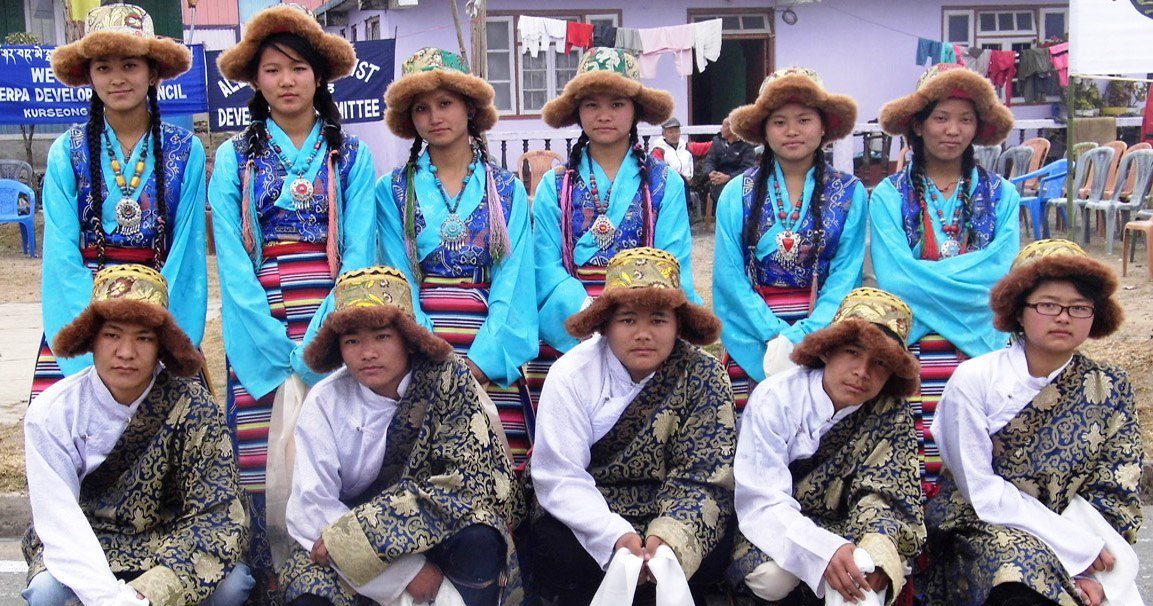
Sherpa society follows its own internal logic rooted in independence, mutual trust, ritual, and clearly defined rights. Family life, romantic relationships, marriage, and inheritance operate under long-standing customs that prioritize personal agency, clan rules, and social balance.
What follows is a detailed look into Sherpa family structure, engagement rituals, marriage ceremonies, gender roles, property rights, and inheritance practices, presented exactly as they function within the Solu Khumbu region.
The Sherpa Family Structure
The Sherpa family consists of a father, a mother, and their children. You must understand that creating a family here unites two independent lives. A Sherpani never submits to the authority of a mother-in-law.
Seasonal migrations and scattered crops often force couples apart. Sherpas rely on independence and absolute trust during these times. This lifestyle ignores standard obligations that bind other couples.
Prenuptial Relations
Sherpas respect clan exogamy. Young people manage their own romantic lives with great freedom. You find these interactions in the common room where the whole family sleeps.
Do not view the Solu Khumbu Trek region as a place of sin. A Sherpani typically has only one or two lovers before marriage. Women maintain fierce modesty.
The Sodene (Engagement)
Families initiate marriage preparations. Yet the Sherpani retains full power to break an engagement she dislikes. There is a specific process to reach marriage. The woman has the right to stop this process at any moment.
The boy’s father asks the girl’s father for her hand. If he anticipates a “yes,” he brings a keg of beer. A relative makes the request if the outcome remains uncertain.
- The girl’s parents reject the beer to say no.
- They accept the beer to promise consideration.
- They accept the beer and the request immediately.
Upon acceptance, the young man spends many nights with his fiancée. This pre-marriage period lasts for months or even years. You see no demand for fidelity or economic support during this time. Broken engagements happen frequently. Parents try to influence their children to make a “good match.”
Marriages between Khambas and Sherpas occur often. Marriages between Sherpas and Khamendeu remain impossible. Clan exogamy allows no exceptions. Consanguinity through maternal lines occurs rarely.
The Dem-chang (Confirmation)
This ceremony confirms the Sodène engagement.
A procession of the fiancé’s parents and friends heads to the bride’s village. The groom does not attend. They wear their finest clothes and jewels. They carry bottles and kegs of beer. A family member offers a prayer. The group enters the fiancée’s house.
Hosts offer beer.
A Lama pronounces a blessing.
Young men offer katas (scarves) to the bride’s father, grandparents, and brothers.
They pour beer for family members.
The bride’s father announces that his daughter now belongs to the groom’s father as a daughter-in-law. The groom’s father gives a bowl of beer and a second kata to the bride’s father. Guests dance and drink heavily. The fiancé joins the party at this stage. The fiancée does not dance.
The celebration moves to the homes of the bride’s relatives. Men and women engage in raw verbal jousting. Hosts serve rice and stew. This tour lasts until morning or continues for a full day if the family possesses wealth.
Dem-chang establishes legal rights identical to marriage. If one fiancé dies, their sibling inherits the rights established by the ceremony. Breaking a Dem-chang engagement requires paying the phijal. This is the same fine you pay for breaking a marriage.
If the fiancée lives and works at the groom’s home before marriage, she receives payment in clothes and jewelry. Sherpas call this kissim.
Zendi (The Marriage)
Marriage follows the Dem-chang or two other ritual visits called ti-chang and pe-chang. Rich families make these visits lavish. During pe-chang, a Lama fixes a favorable wedding date.
The young woman leaves her family only at the wedding. She receives her dowry at this time. This property belongs to her for life.
The day before the wedding, the bride’s parents invite friends to present gifts. You create a list of these gifts to settle disputes in case of divorce. These items belong exclusively to the bride. The ceremony spans two days.
Day One
The groom’s guests gather at his parents’ house in luxury clothing. A Lama places a banner called sipa-kolu outside. This chases away evil spirits. The bride’s family gathers at her parents’ house. The bride wears her oldest clothes.
The groom’s parade approaches the bride’s house.
People fire guns and set off firecrackers.
Everyone enters the bride’s home.
A Lama presides over tea and beer.
An orator speaks about the difficulties of life’s journey.
Women serve yangdzi, a drink of tea and beer. Singing and dancing follow. Young relatives of the bride offer yangdzi kata to guests. This symbolizes new bonds. The groom’s guests leave to tour the bride’s relatives again. This takes all day.
Day Two
The groom’s guests return to the bride’s house. The bride wears new clothes. She sits with the groom opposite the Lama. Someone places the ritual cloak, angi-tang-za, on them. The couple sheds tears and drinks tea. The Lama blesses them.
The groom’s father instructs his daughter-in-law:
- Share his son’s bed.
- Pay a fine if you commit adultery.
- Reject advances from other men.
The bride’s father gives the same instructions to the groom. Conches and cymbals sound. The ceremony ends in loud noise. The couple leaves the house.
The groom pays for the ceremony and the procession. The bride’s family often profits from organizing the groom’s parade. The bride travels to her husband’s home with a procession of girls carrying her dowry. They stay for three days drinking and dancing.
Rights and Duties
- Both partners owe fidelity.
- You own assets commonly during the union.
- You split asset gains in half upon separation.
- The spouse who leaves unilaterally pays an indemnity.
Polyandry and Polygamy
Polyandry usually involves two brothers marrying the same woman. Parents arrange this to avoid splitting property.
The woman gains security from this arrangement. She always has a man at home. She often gains a younger husband. The standard match joins an older brother and his younger brother. The wife enjoys a higher standard of living because two husbands contribute assets.
A younger brother has the right to refuse this. He must participate in the marriage ceremony to be included. Today, young Sherpa women reject sharing themselves between two husbands.
Polygamy happens rarely. You mostly see it when a widow joins her sister’s household as a second wife. This sometimes involves a Dem-chang ceremony.
Parents and Children
Children care for themselves as soon as they walk. Parents work away from home.
Children take responsibility for livestock at age eight.
Fathers join children at night if the herd grazes far away.
Girls manage herds if the family has no boys.
Girls otherwise handle housework.
Families live in close quarters. A son has no economic obligation to his father once he leaves the family unit. Parents rely only on the youngest son for old-age care. He stays in the family home.
The Illegitimate Child (Themba)
Sherpas consider a child illegitimate if born outside a relationship consecrated by Dem-chang or Sodène. This applies also to children born to a wife during her husband’s long absence.
If the identified father refuses to marry the mother, he pays an indemnity called ne-ngum-tipsil. He also compensates the woman for her inability to work. Sherpas possess a strong sense of responsibility. Paternity disputes rarely become conflicts.
Property and Inheritance
Private property is sacred. The husband holds the rights of the children. In a divorce, the woman leaves without the total household assets. She takes only her jewelry. These items remain the inalienable property of women.
The same rule applies if a man remarries and has new children. The children from the first marriage keep their rights.
Sherpas say the will of a dying person acts like a royal decree. Most assets follow the paternal line. Women inherit specific items like jewelry and dowry.
Conclusion
Sherpa family life is built on autonomy, ritual clarity, and mutual responsibility rather than rigid control. Engagements and marriages grant women clear rights, property rules protect individual ownership, and social mechanisms resolve disputes without escalation.
From Sodène to Dem-chang to Zendi, these traditions reveal a system designed to preserve harmony, dignity, and continuity balancing personal freedom with deep respect for communal structure.