

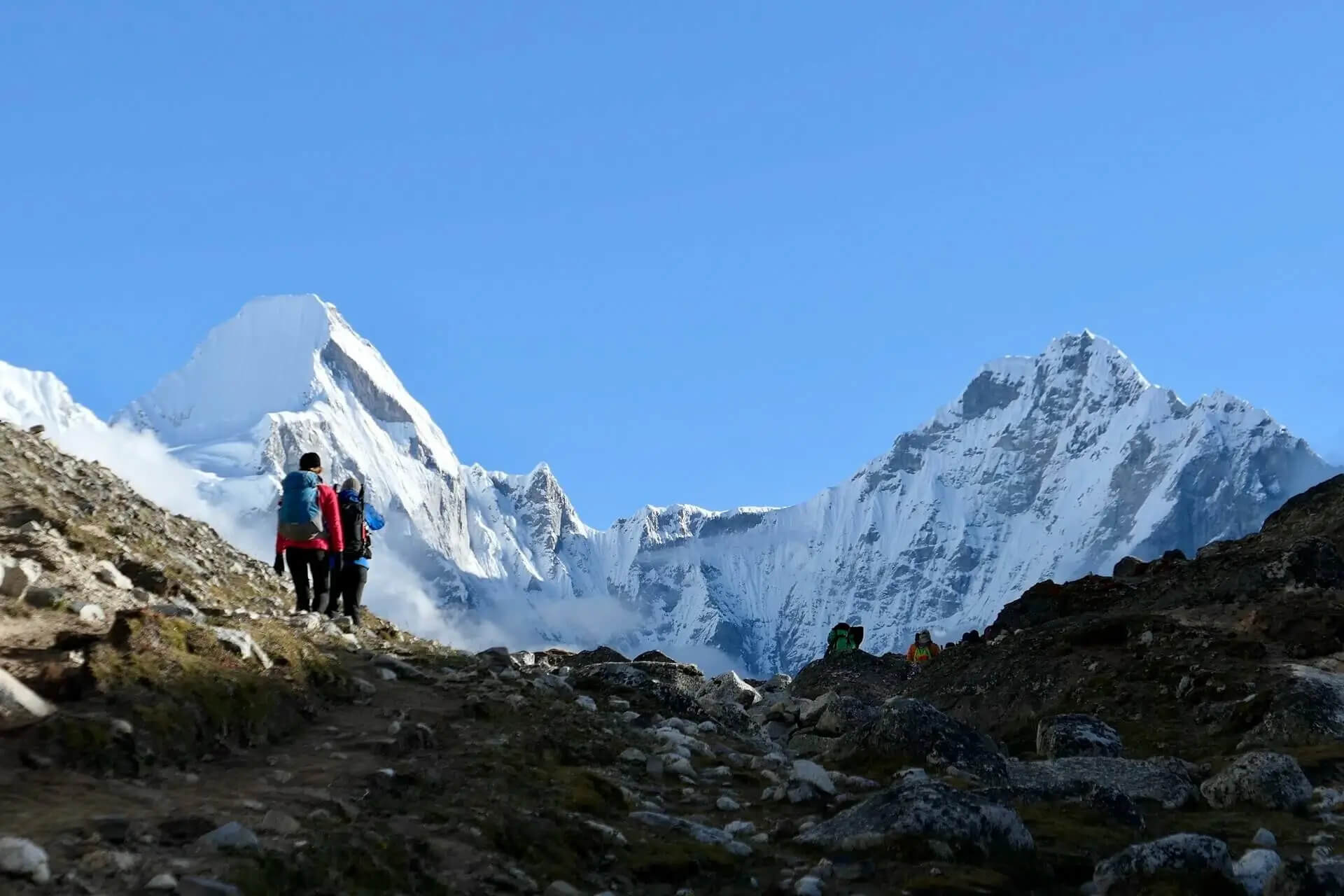
February occupies an unusual position in Nepal’s trekking calendar. Winter cold persists at higher elevations while lower valleys experience pleasant daytime warmth. Most trekkers avoid this month assuming conditions prove too harsh. This misconception creates opportunities for those understanding February’s actual characteristics.
Why Trekking in Nepal in February a Good Choice
1. Weather Patterns and Temperature Reality
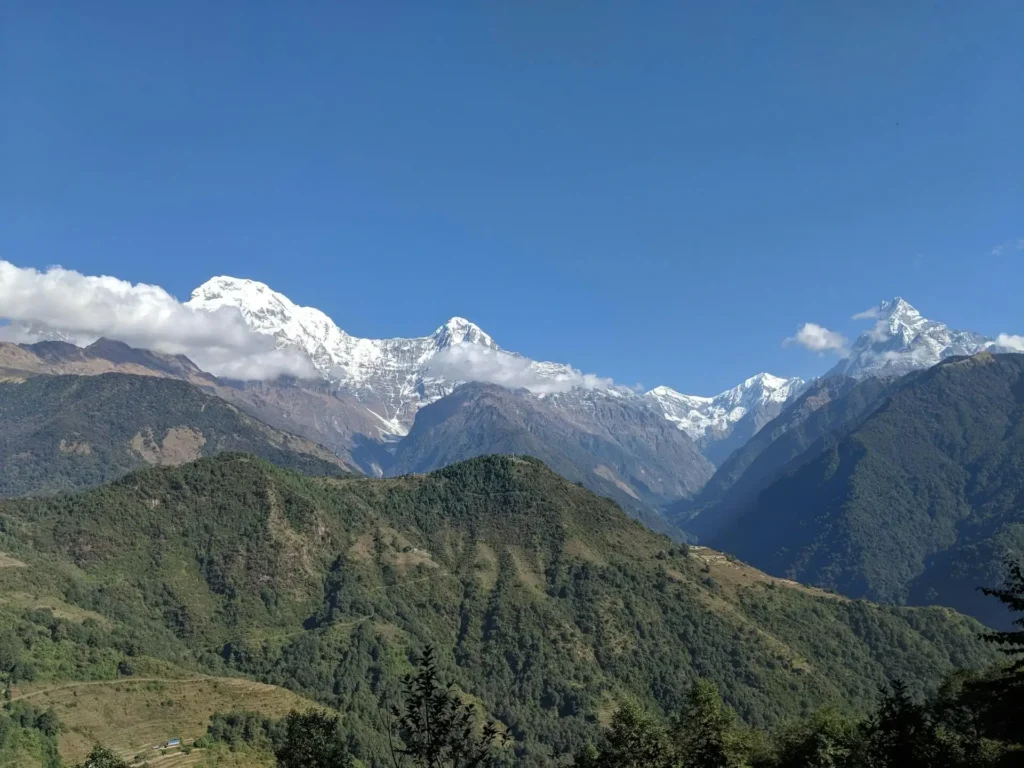
February represents the final month of Nepal’s dry season winter period. Precipitation remains minimal across most trekking regions. Snowfall occurs primarily above 4,000 meters with lower elevations receiving virtually none. Rain proves exceptionally rare with clear skies dominating most days.
Temperature ranges vary dramatically by elevation and time of day. Lower valleys between 1,000 and 2,500 meters experience daytime highs of 12 to 20 degrees Celsius. Mornings start cool around 2 to 8 degrees. These moderate temperatures suit comfortable trekking without overheating.
Mid-elevation zones from 2,500 to 3,500 meters see daytime temperatures of 5 to 12 degrees Celsius. Nights drop to minus 5 to plus 5 degrees. Proper layering systems manage these fluctuations easily. Lodges provide blankets and sometimes heating supplementing sleeping bags.
High-altitude areas above 3,500 meters face genuine winter conditions. Daytime temperatures hover around minus 5 to plus 5 degrees Celsius. Nights plunge to minus 15 to minus 5 degrees. These zones require serious cold-weather equipment and experience. Many high passes close due to snow accumulation.
Microclimate variations create surprising warmth in protected valleys. South-facing slopes receive intense solar radiation during clear days. Temperatures in these sun-traps can reach 15 degrees even at 3,500 meters. North-facing slopes remain frozen throughout February.
Wind patterns influence perceived temperature significantly. Morning calm gives way to afternoon valley winds. Ridges and passes experience sustained winds amplifying cold. Wind chill calculations show apparent temperatures 10 degrees lower than actual readings in exposed areas.
2. Trail Conditions and Accessibility in February
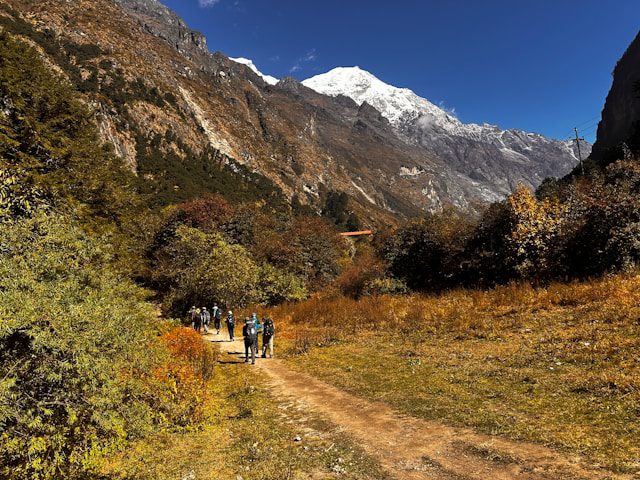
Lower elevation trails remain dry and well-defined throughout February. Dust becomes an issue on popular routes given months without rain. Bringing buffs or masks prevents respiratory irritation. Trail maintenance occurs during dry months improving path quality.
Snow coverage begins around 3,500 to 4,000 meters depending on aspect and recent weather. South-facing trails clear quickly after snowfall. North-facing approaches retain snow and ice for weeks. Microspikes or crampons prove necessary for icy sections.
Popular routes including lower Everest Base Camp trek and Annapurna Circuit up to Manang remain accessible. Well-traveled paths stay packed and defined even with snow cover. Tea houses operate continuously maintaining trail conditions. These established routes suit February trekking.
High passes including Thorong La, Cho La, and Renjo La face closure risk. Accumulated snow and avalanche danger close these crossings during heavy winter years. Lighter winters allow passage with proper equipment and guides. Checking current conditions before committing to high-pass routes proves essential.
River crossings present fewer challenges during February. Low water levels from minimal precipitation and frozen high-altitude sources make fording easier. Bridges remain accessible without monsoon flooding. This advantage particularly benefits remote areas with numerous crossings.
Landslide and rockfall risks decrease substantially. Dry conditions stabilize slopes reducing debris movement. Trails passing beneath cliffs prove safer than during monsoon. This factor improves safety on routes known for geological hazards.
3. Crowd Levels When Trekking in Nepal in February
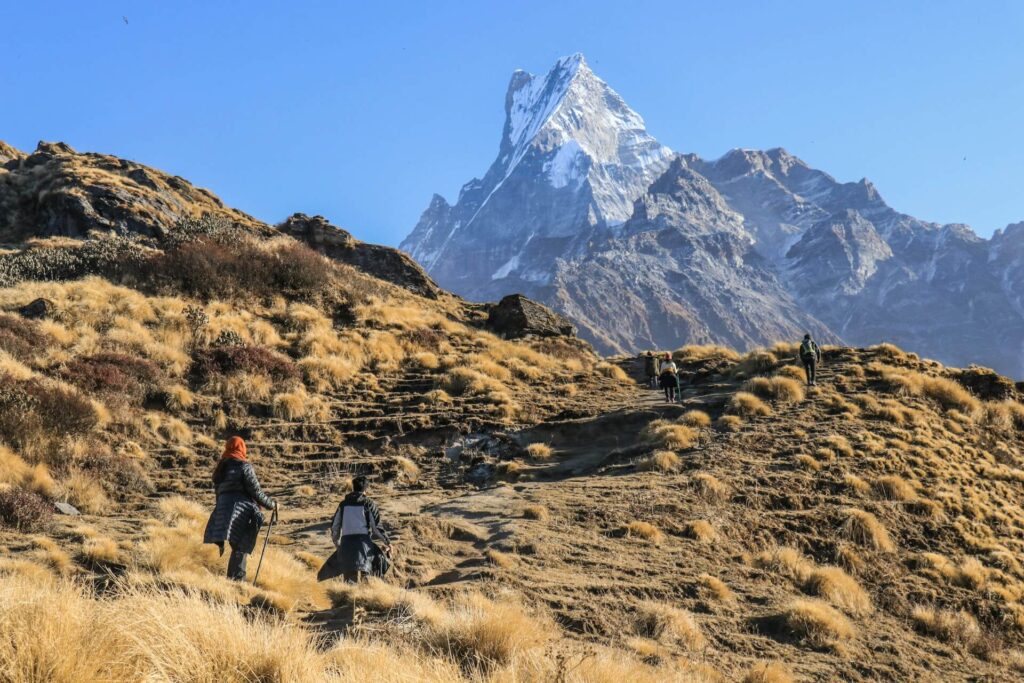
February ranks as Nepal’s least-crowded trekking month. Tourist arrivals drop to annual lows. Popular viewpoints and photo locations become available without waiting. Lodges operate well below capacity ensuring room availability and personal space.
Solo trekkers find meeting others more challenging. Fewer people on trails means going days without encountering other groups. Those seeking social interaction may feel isolated. Conversely, those desiring solitude find ideal conditions.
Tea house availability proves excellent despite reduced demand. Most establishments remain open serving the limited February traffic. Competition for customers results in better service and potential price negotiation. Staff time allows extended conversations and cultural exchange.
Guide and porter availability increases. Trekking agencies maintain staff year-round. February bookings allow choice of most experienced guides. Last-minute arrangements prove feasible unlike peak seasons when guides book months ahead.
The village atmosphere shifts toward authentic daily life. Communities function normally without tourism disruption. Travelers observe genuine cultural practices rather than tourist-oriented activities. This authenticity enhances cultural immersion experiences.
Popular viewpoints lose photographic appeal due to lack of human elements. Empty trails photograph beautifully emphasizing landscape scale. However, shots showing trekking culture require careful timing to include rare other hikers.
4. Cold Weather Management Strategies
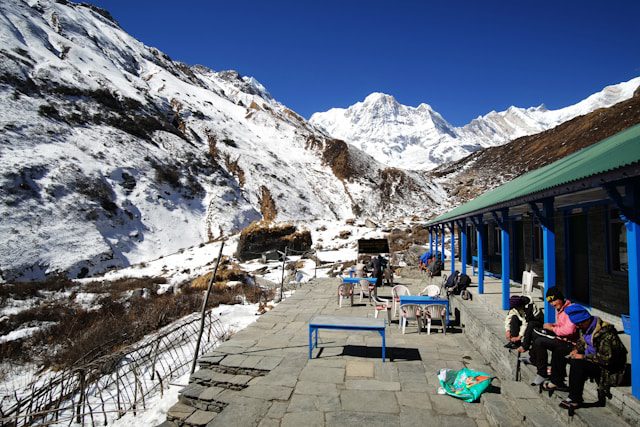
Layering systems prove essential for February trekking success. Base layers in merino wool or synthetic fabrics manage moisture. Mid-layers including fleece and down jackets provide insulation. Outer shells block wind and occasional precipitation. Carrying multiple layer options allows adjustment throughout days.
Morning starts in cold conditions require full layering. Trekkers often begin hikes wearing down jackets removed after 30-60 minutes of exertion. Stopping for breaks necessitates adding layers immediately preventing chill. This constant adjustment becomes routine.
Extremity protection demands attention. Fingers and toes cool rapidly in February conditions. Insulated gloves rated for minus 10 degrees minimum prove necessary. Liner gloves enable fine motor tasks without full glove removal. Warm socks in properly-fitted boots prevent toe numbness.
Face protection prevents windburn and frostbite. Balaclavas or buffs cover exposed skin on windy ridges and passes. Sunscreen remains essential given intense high-altitude UV radiation reflecting off snow. The combination of sun and cold creates unique exposure challenges.
Hydration requires deliberate effort despite cold reducing thirst sensation. Dehydration occurs as easily in winter as summer. Insulated bottles prevent freezing during trekking. Drinking warm liquids provides comfort while maintaining hydration. Tea houses offer endless hot water supporting this strategy.
Sleeping warmth determines rest quality affecting overall trek enjoyment. Four-season sleeping bags rated to minus 15 degrees suit most February treks. Sleeping bag liners add 5-10 degrees warmth. Hot water bottles placed in sleeping bags before entry pre-warm interiors.
Route Selection for Trekking in Nepal in February
Lower elevation cultural treks excel during February. Gurung Villages trek operates between 1,200 and 2,500 meters avoiding severe cold. Daytime temperatures remain comfortable for walking. Cultural immersion dominates over high-altitude mountain views. This route suits those prioritizing comfort and culture.
Mid-elevation circuits offer balanced experiences. Solu Sherpa trek ranges from 2,000 to 3,800 meters. This elevation profile provides mountain views without extreme cold. Sherpa culture and Buddhist monasteries create rich experiences. Proper cold-weather gear handles occasional nighttime freezing.
High-altitude destinations require serious consideration. Everest Base Camp at 5,364 meters faces harsh February conditions. Temperatures remain well below freezing continuously. Teahouse availability decreases with some closing. Only experienced trekkers with proper equipment should attempt.
Langtang Gosaikund circuit presents manageable high-altitude exposure. Maximum elevation of 4,380 meters at Gosaikund lakes tests cold tolerance. The route spends most time between 2,000 and 3,500 meters where conditions remain reasonable. One or two nights at extreme altitude allow properly acclimatized trekkers to succeed.
Annapurna Circuit viability depends on desired completion point. Trekking to Manang at 3,540 meters succeeds reliably. Crossing Thorong La at 5,416 meters becomes uncertain depending on snow conditions. Many February trekkers complete partial circuits enjoying lower sections without pass crossings.
Alternative routes avoiding mainstream corridors provide excellent February options. Nar Phu Valley, Tsum Valley, and Makalu Base Camp see minimal traffic. Trail conditions remain good without crowding. These regions offer wilderness experiences impossible during peak seasons.
February Trek Perks: Wildlife and Natural Environment
Winter bird migrations bring species from higher latitudes. Waterfowl populate valley rivers and lakes. Raptors including eagles and vultures soar on thermal currents. Birding enthusiasts find February rewarding despite some resident species moving to lower elevations.
Mammal viewing improves with reduced vegetation cover. Deciduous forests drop leaves exposing animals to observation. Himalayan tahr descend to lower elevations seeking forage. Langur monkeys become more visible in bare trees. Patient observers encounter diverse fauna.
Snow leopards reach peak activity during February breeding season. These elusive cats move through lower elevations more frequently. While sightings remain rare, signs including tracks and scat appear commonly. Specialized wildlife treks target snow leopard habitat during this period.
Plant life enters dormancy presenting stark landscapes. Rhododendron forests appear gray and lifeless. This bareness emphasizes landscape geology and topography. Spring’s approaching renewal remains invisible in February’s winter grip.
Agricultural patterns show winter crop cycles. Barley and wheat planted in autumn grow slowly. Terraced fields appear green at lower elevations. Village life centers on winter activities including weaving and home maintenance visible to passing trekkers.
River flows drop to annual minimums. Glacial melt ceases with sustained freezing. Snowmelt contribution remains minimal. Clear water runs in reduced volumes revealing riverbed rocks. Reduced flow creates aesthetic appeal in valley streams.
Economic Considerations When Planning Treks
Lodge pricing drops during February low season. Competition for limited customers creates negotiation opportunities. Room rates decrease 20-40% compared to peak season pricing. Meal costs remain stable but deals on accommodation improve overall trek affordability.
Guide and porter wages remain standard year-round. However, availability and selection improve. Agencies offer discounts on package prices trying to maintain cash flow. Going on trekking in Nepal in February, the bookings benefit from these reduced rates while maintaining service quality.
Domestic flight reliability improves during clear February weather. Mountain flights to Lukla operate consistently without weather delays. This reliability prevents extended Kathmandu waits and schedule disruptions. Flight availability also improves with reduced demand.
Permit costs remain fixed regardless of season. Trekking permits and national park fees charge standard rates. No discounts apply for February trekking. These fixed costs represent smaller budget portions when lodge costs decrease.
Equipment rental costs stay constant. Kathmandu rental shops maintain standard pricing throughout the year. However, selection improves with fewer people renting simultaneously. Obtaining specific sizes and preferred equipment becomes easier.
Total trek costs decrease 15-25% compared to peak season. Reduced lodge expenses drive most savings. Fixed costs including permits, guides, and transportation maintain standard rates. Budget-conscious trekkers gain significant value choosing February departures.
Essential February Trekking Tip: Health and Safety Considerations
- Altitude sickness risk remains constant across seasons. Acclimatization requirements don’t change with weather. Proper pacing and rest days prevent acute mountain sickness regardless of temperature. Cold stress can mask early altitude symptoms requiring careful monitoring.
- Rescue operations face challenges in winter conditions. Helicopter evacuations depend on weather windows. Cloud cover and wind can delay emergency flights. Comprehensive travel insurance covering helicopter rescue proves essential. Satellite communication devices enable emergency contact from remote areas.
- Frostbite risk increases with February cold. Exposed skin freezes rapidly in wind chill conditions. Monitoring extremities prevents permanent damage. Early recognition allows warming before tissue damage occurs. Proper equipment selection mitigates most risk.
- Dehydration develops insidiously in cold weather. Reduced thirst sensation despite significant water loss creates dangerous situations. Forcing regular fluid intake prevents dehydration-related complications. Dark urine indicates inadequate hydration requiring correction.
- Respiratory infections spread in enclosed tea house environments. Cold weather keeps trekkers indoors more. Close quarters facilitate disease transmission. Hand hygiene and avoiding face touching reduces infection risk. Carrying basic medications treats minor illnesses preventing trek abandonment.
- Trail injuries occur less frequently on frozen stable paths. Mud and slippery conditions common in monsoon disappear. However, ice and snow create different fall risks. Trekking poles and proper footwear prevent most incidents. Slower winter pace allows careful foot placement.
Glacier Safari Treks February Departures 2026
- Gurung Villages trek is a nine-day journey which explores Annapurna foothills between 1,200 and 2,500 meters. Mild temperatures and cultural immersion create ideal introductions to Himalayan trekking. Traditional village homestays provide authentic experiences. Maximum group size of twelve ensures personalized attention.
- Solu Sherpa cultural trek takes you to the Sherpa heartland trails below Everest to showcase Buddhist culture and mountain panoramas. Elevations ranging from 2,000 to 3,800 meters require moderate fitness. Ancient Tengboche and Thame monasteries anchor cultural programming. Small group sizes enable meaningful local interaction.
- Langtang Gosaikund circuit is a thirteen-day trek that represents the most challenging February option. Diverse ecosystems from bamboo forests to alpine lakes create varied landscapes. Gosaikund sacred lakes at 4,380 meters form the trek highlight. Proper acclimatization built into the itinerary prevents altitude issues. Only three spots remain for this limited departure.
All February departures include experienced guides with winter trekking expertise. Cold-weather protocols ensure safety in low temperatures. Porter services carry main luggage while trekkers carry only daypacks. Tea house accommodation provides warmth and local cuisine. Comprehensive pre-trek briefings cover equipment and expectations.
Package pricing reflects February’s value season. Reduced rates compared to October and November make quality treks accessible. Inclusions cover permits, accommodation, meals during trekking, guide and porter services, and ground transportation. International flights and Kathmandu hotels remain separate.
Processing permits and arranging logistics requires minimum lead time. Last-minute bookings risk unavailability as group maximums approach. Contact Glacier Safari Treks immediately to secure final seats.
Wrapping Up: Making the February Decision
Trekking in Nepal in February suits specific trekker profiles exceptionally well. Those prioritizing clear mountain views over warm temperatures find ideal conditions. Photographers seeking optimal light and visibility choose February deliberately. Travelers avoiding crowds appreciate empty trails and personal space.
Cultural enthusiasts benefit from authentic village experiences. Communities function normally without tourist disruption. Genuine daily life observation surpasses tourist-oriented activities. Language and cultural barriers remain but enhanced interaction time compensates.
Budget travelers gain 20-25% savings compared to peak seasons. Reduced lodge costs and package discounts stretch budgets further. Equipment quality and guide experience remain constant despite lower prices. Value-conscious trekkers maximize bang for buck.
Experienced trekkers comfortable with cold conditions embrace February challenges. Proper equipment and realistic expectations enable successful treks. Winter experience from other mountain regions translates well. Those lacking a cold-weather background might reconsider or select lower-elevation routes.
Physical fitness requirements don’t change seasonally. February trekking demands equivalent conditioning to other months. Cold weather and layering doesn’t significantly impact exertion levels. Standard preparation routines suffice for February departures.
FAQs on February Treks in Nepal
1. Will I be the only trekker on the trail when trekking in Nepal in February?
February sees significantly reduced traffic but not complete isolation on established routes. Expect encountering other groups every few days rather than constantly. Glacier Safari Treks’ small group departures provide social interaction eliminating solo concerns while maintaining uncrowded trail benefits.
2. Can beginners go on trekking in Nepal in February?
Beginners succeed on lower-elevation routes including Gurung Villages trek. Moderate temperatures and gradual elevation profiles suit first-time trekkers. Higher routes require previous experience with cold conditions and altitude. Selecting appropriate routes matches beginner capabilities with February conditions.
3. What happens if heavy snow blocks the trekking trails in February?
Experienced guides monitor conditions continuously adjusting itineraries when necessary. Alternative routes and flexible scheduling accommodate weather impacts. Travel insurance covering trip interruption protects financial investments. February’s generally stable weather makes major disruptions unlikely on selected routes.
4. Do I need technical mountaineering equipment?
Standard trekking routes require no technical gear. Warm clothing, good boots, and trekking poles suffice. Microspikes for occasional icy sections prove useful but not essential. Technical equipment becomes necessary only for extreme high-altitude passes typically avoided in February.
5. Are there still available spots for late February treks?
Limited spaces remain for Glacier Safari Treks’ late February departures. The February 22nd Gurung Villages trek has four spots available. The February 26th Solu Sherpa trek holds three openings. Contact us immediately at glaciersafaritreks.com to secure your position before these final opportunities close.