

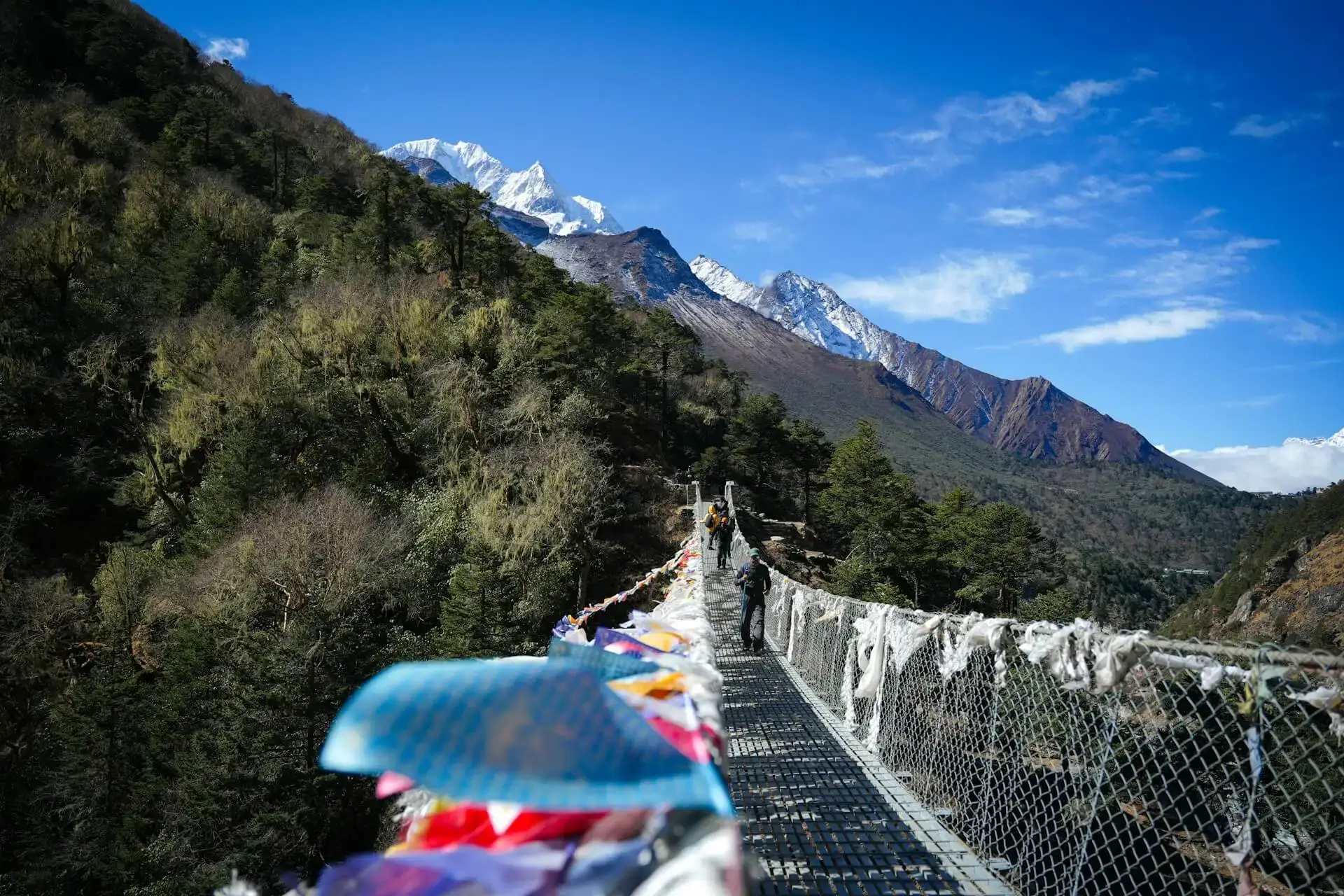
Spring in Nepal runs from March through May. For trekkers, this means rhododendrons in bloom, stable pre-monsoon weather, and the best visibility windows of the year on high-altitude routes. For trekking operators, it means the busiest booking period on the calendar. Permits sell out. Tea houses fill weeks in advance. Guides and porters are spoken for months before the season opens. If you are planning a spring trek in Nepal and thinking you can sort the details a few weeks out, the numbers say otherwise.
How Demand Builds for Spring Treks in Nepal
Nepal receives the bulk of its trekking traffic in two windows: spring (March to May) and autumn (October to November). Of the two, spring carries the higher concentration of Everest-region bookings because it is the primary summit season for 8,000-metre peaks. When Everest expedition teams move through the Khumbu, they bring with them a wave of supporting logistics, high-altitude workers, and a parallel surge of trekkers who want to walk to Base Camp while the mountain is active.
The Annapurna Circuit and Annapurna Base Camp routes see similar pressure, driven partly by the rhododendron bloom between 2,000 and 3,500 metres, which peaks in March and April. Photographers, naturalists, and general trekkers all converge on the same corridors during the same three to four week window.
Langtang and Manasalu have seen increasing spring bookings over the last several years as routes that were once considered alternatives to the main circuits have developed their own reputations. The result is that demand is spreading across more routes without the infrastructure of those routes scaling at the same pace.
The pattern compounds annually. As more trekkers share itineraries and photos from spring expeditions, the season attracts more interest. Booking inquiries for the following spring begin arriving before the current season has ended.
The Permit System and Why It Creates Bottlenecks
Nepal’s trekking permit system involves multiple authorities depending on the route. The Trekkers’ Information Management System (TIMS) card applies across most routes. Restricted area permits for places like Upper Mustang, Manaslu Circuit, and Dolpo are issued in limited numbers and require a licensed trekking agency to process. National park entry permits cover Sagarmatha, Annapurna, and Langtang conservation areas.
For popular routes, the permit process itself is not the primary constraint. For restricted routes, it is. Upper Mustang, for instance, allows a limited number of trekkers per year and requires a minimum group size through a registered agency. These permits are quota-controlled, and once the available slots for a season are spoken for, the route is effectively closed to new bookings regardless of how far in advance you inquire.
On unrestricted routes like the Everest Base Camp trail, the bottleneck shifts from permits to physical infrastructure. Tea houses along the route to Base Camp have finite beds. The lodges at Namche Bazaar, Tengboche, Dingboche, and Gorak Shep operate at capacity during peak spring weeks. A trekker who has arranged flights and permits but has not confirmed accommodation can find themselves sleeping in dining rooms or turned away entirely at altitude, where finding alternatives is not a simple matter of walking to the next street.
Group Sizes and How They Affect Availability
Group dynamics play a significant role in how quickly availability disappears. A single organized group of twelve trekkers can book out an entire section of a small tea house. Larger groups of twenty or more on restricted routes consume a substantial portion of the permit quota for a given week.
For independent trekkers booking as individuals or pairs, this creates a structural disadvantage. By the time individual inquiries reach an operator, the desirable departure dates have often already been committed to group bookings that arrived months earlier.
The guides and porter pool adds another dimension. Experienced high-altitude guides with strong English and technical qualifications are a finite resource. Licensed guides with multiple seasons of Everest-region experience are often contracted by operators in the October to December window for the following spring. By January, the available pool of senior guides decreases considerably. Trekkers who book late often find that while a trek is technically possible to arrange, the staffing quality available at short notice is lower than what was available to earlier bookings.
This matters practically. On routes with altitude risk, river crossings, or variable conditions, guide experience is a safety variable, not a service preference.
What “Sold Out” Actually Means
When a trekking route or departure date is described as sold out, it rarely means every single logistical element is unavailable. It usually means that the combination of dates, accommodation, permits, and qualified staffing you want cannot be assembled from what remains.
You might find a guide but not the tea house rooms on the required nights. Or the rooms but no flights into Lukla for your preferred dates, since Tenzing-Hillary Airport operates a limited number of flights daily and slots fill well ahead of spring. Or the permits are available but the operator you want to work with has no senior guides free for your window.
The practical effect is the same: the trek you planned is no longer available as you planned it. The options that remain involve either compromising on quality, adjusting dates by days or weeks, shifting to a less congested route, or paying premium rates for last-minute logistics that still cannot fully replicate what was available at the time of early bookings.
When to Book
The most straightforward answer is: book your spring trek between September and November of the preceding year. This is when operators are fresh from the autumn season, staffing contracts are being negotiated for the following spring, and accommodation and permit slots are still open across the full range of dates.
Booking in this window gives you the widest choice of itineraries, departure dates, guide quality, and price points. It also gives you and your operator time to plan altitude acclimatization properly, which is a medical and logistical consideration that rushed bookings often compress to the point of risk.
December and January bookings are still viable for most routes, though the best departure windows and senior guide availability begin to narrow. Popular tea house rooms along Everest Base Camp and Annapurna Base Camp routes are committed at a faster rate from January onward as the season approaches.
February inquiries for March departures exist in a different category. Some logistics can still be arranged, but the degree of compromise increases substantially. Lukla flights for late March and April are heavily contested. Last-minute packages, where available, often reflect the cost of expedited arrangements rather than the market rate.
Choosing the Right Operator
The trekking industry in Nepal spans a wide range of operators, from large companies with established logistics networks to small independent outfits. For spring season treks, operator selection affects more than experience quality. It affects logistical reliability.
A well-established operator with long-standing relationships with tea house owners along a route has a meaningful advantage in securing accommodation during peak weeks. They have standing reservations, repeat-season agreements, and the trust that comes from years of consistent bookings. An operator without those relationships is competing for rooms on the same terms as individual walk-in trekkers.
Similarly, operators who maintain long-term working relationships with experienced guides and porters, rather than contracting fresh each season, tend to have better staffing consistency. The guide who walked the Everest Base Camp route fifteen times has route knowledge that matters when weather shifts or a trekker develops altitude symptoms faster than expected.
When evaluating an operator for a spring trek, ask directly about their accommodation agreements on your specific route, their staffing plans for your dates, and how they handle itinerary changes if conditions require it. The answers tell you more about actual logistical competence than any number of website testimonials.
Glacier Safari Treks handles spring season bookings with attention to these specifics. Enquire now for upcoming trekking seasons to check availability for your preferred route and dates before the window closes.
Acclimatization and Why Rushed Bookings Create Risk
One consequence of late booking that receives less attention than logistics is the pressure it creates on itinerary design. Proper acclimatization on high-altitude routes is not a preference. It is a physiological requirement.
The standard recommendation for Everest Base Camp is a minimum of twelve to fourteen days from Lukla to Base Camp and back, with rest days built in at Namche and Dingboche. Trekkers who compress this schedule to fit a narrow available window, or who choose a faster itinerary because it is the only one still available at short notice, increase their exposure to acute mountain sickness, high-altitude pulmonary oedema, and high-altitude cerebral oedema.
None of these conditions respect the quality of your gear or the fitness level you arrived with. They respond to altitude gain rate and acclimatization time. A rushed itinerary driven by late booking logistics is a medical risk factor, not just an inconvenience.
Early booking gives you and your operator the time to design an itinerary that fits both your schedule and the physiological requirements of the altitude. It allows for buffer days to be built into the plan, which also absorb the weather delays that are common at altitude regardless of season.
Practical Steps for Planning Ahead
Decide on your route before you contact an operator. General inquiries for “a trek in Nepal” in March take longer to process and often result in generic itineraries. A specific route inquiry allows an operator to give you accurate availability information immediately.
Get your fitness assessment done early. Guides assess trekker fitness during the trek, but your own honest pre-trip evaluation determines whether the route you want is appropriate. High-altitude routes require a cardiovascular base. Building that base takes months, not weeks.
Sort your travel insurance before confirming your trek booking. Helicopter evacuation from altitude costs between USD 3,000 and USD 5,000 or more depending on location. Standard travel insurance rarely covers this. High-altitude trekking insurance with emergency evacuation coverage is a separate category and needs to be in place before you depart.
Check visa requirements and flight options into Kathmandu early. International flights into Tribhuvan International Airport from common departure points in Europe, North America, and Australia fill during spring travel season alongside the trekking demand.
Finally, stay in contact with your operator after booking. Conditions, permits, and logistics can shift between your booking date and departure. An operator who keeps clients informed during the months between booking and trek is one who manages problems before they become crises.