

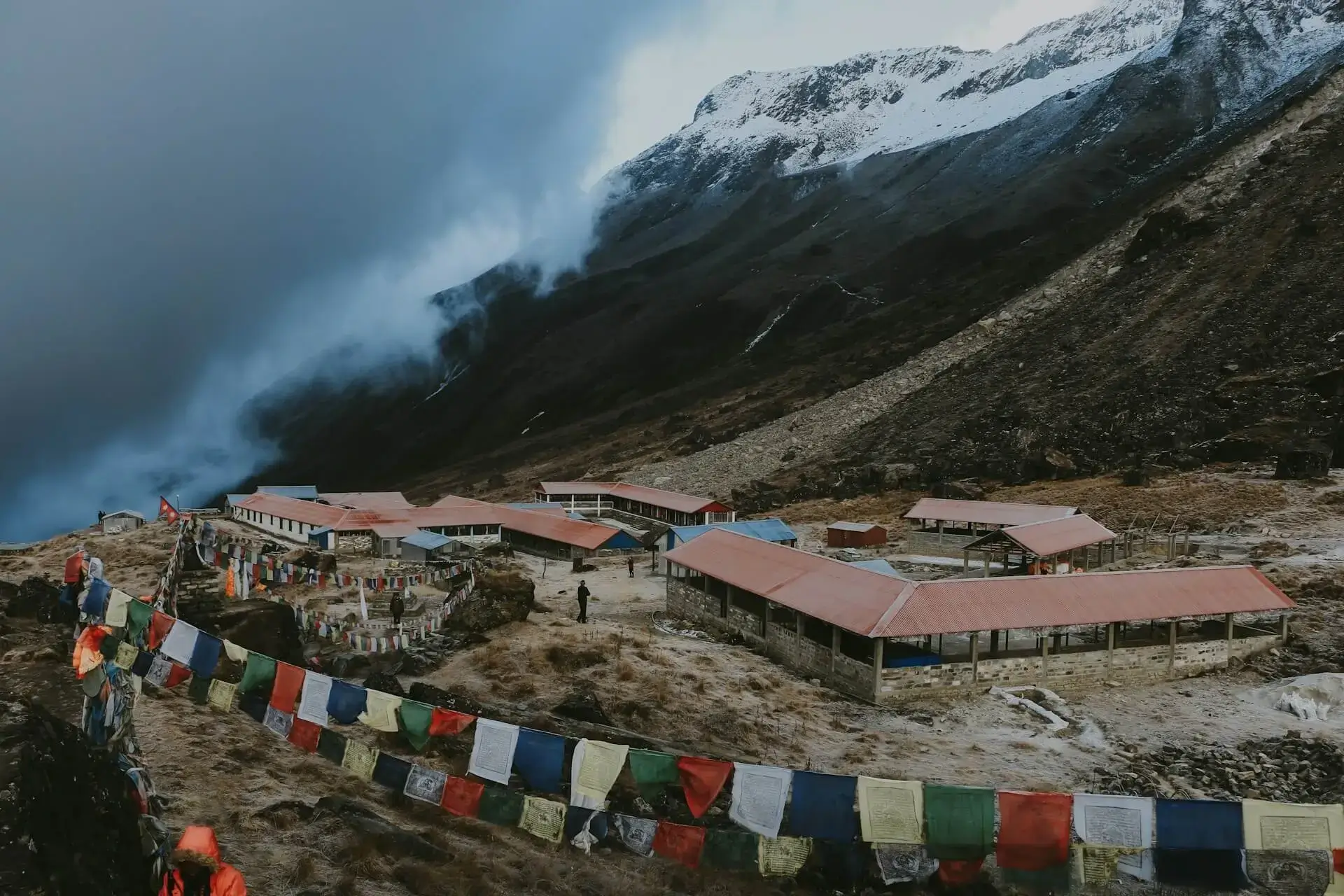
Altitude kills through oxygen deprivation. The human body requires time adapting to reduced atmospheric pressure above 3000 meters. Rushing elevation gain invites acute mountain sickness that progresses to life-threatening pulmonary or cerebral edema without proper descent.
How to Plan Acclimatization for High-Altitude Treks in Nepal?
Glacier Safari Treks builds acclimatization protocols into every high-altitude itinerary preventing medical emergencies while enabling summit success.
1. Altitude Physiology
Atmospheric pressure drops as elevation increases. At 5000 meters, oxygen availability falls to roughly 50 percent of sea level amounts. Bodies compensate through increased breathing rates, elevated heart rates, and higher red blood cell production. These adaptations require days to develop properly.
Acute mountain sickness manifests through headaches, nausea, dizziness, and fatigue. These symptoms indicate inadequate acclimatization requiring rest or descent. Ignoring mild AMS invites progression to high-altitude pulmonary edema where fluid accumulates in lungs or high-altitude cerebral edema causing brain swelling. Both conditions prove fatal without immediate descent and medical treatment.
Individual altitude tolerance varies dramatically regardless of fitness. Marathon runners suffer severe AMS while sedentary individuals acclimatize perfectly. Genetics, previous altitude exposure, and current health status influence adaptation. No fitness level provides immunity requiring conservative acclimatization for everyone.
Ascent rate determines sickness likelihood. Climbing 500 meters daily above 3000 meters allows gradual adaptation. Gaining 1000 meters daily almost guarantees symptoms. Our itineraries limit daily elevation gain following proven protocols preventing altitude illness.
2. Rest Day Integration
Langtang Valley trek includes rest days at Kyanjin Gompa at 3870 meters. Trekkers spend two nights allowing physiological adaptation before optional climbs to Tserko Ri at 4984 meters. This rest day prevents AMS while positioning trekkers for successful summit attempts.
The rest of the day doesn’t mean complete inactivity. Morning hikes to 4200 meters return to sleep at 3870 meters following “climb high, sleep low” principles. This active rest accelerates acclimatization while preventing boredom. Afternoon relaxation allows body recovery.
Nar Phu Valley itinerary includes rest days at Meta at 3560 meters and Phu village at 4050 meters. These stops allow gradual altitude gain before Kang La Pass at 5320 meters. The two-rest-day protocol provides sufficient adaptation time for the high pass crossing.
Tsum Valley trek incorporates a rest day at Chhokangparo at 3010 meters before continuing to Nile and Mu Gompa at higher elevations. While Tsum remains lower than Nar Phu or Langtang, proper acclimatization prevents symptoms improving trek enjoyment.
Rest days allow exploring local culture through monastery visits, village walks, and interactions with residents. These activities provide trek highlights beyond simple altitude gain. The cultural immersion justifies rest days beyond just physiological necessity.
3. Gradual Ascent Profiles
Our Langtang itinerary climbs from Syabrubesi at 1503 meters to Kyanjin Gompa at 3870 meters over five days. This 2367-meter gain spreads across multiple days, preventing dangerous rapid ascent. Daily gains average 474 meters staying well within safe limits.
Nights spent at intermediate elevations allow adaptation. Lama Hotel at 2470 meters, Langtang village at 3430 meters, and finally Kyanjin Gompa create stepping stones. Bodies adjust gradually rather than shocking systems with rapid elevation change.
Nar Phu approaches from Koto at 2600 meters and reaches Meta at 3560 meters over two days through a dramatic gorge. The 960-meter gain splits across two days maintaining safe ascent rates. From Meta, reaching Phu at 4050 meters takes another day adding just 490 meters.
The conservative profile allows 99 percent of trekkers to reach destinations successfully. Aggressive itineraries saving days create 30 to 40 percent AMS rates requiring evacuations. Our slower pace prevents medical issues and evacuation costs.
Descent follows similar principles. Dropping too quickly causes problems for some individuals. Gradual descent prevents the rare complications from rapid pressure changes. Our return routes maintain reasonable daily descent rates.
Signs of Acute Mountain Sickness
Here are some signs to look out for Acute Mountain Sickness:
- Headache represents the primary AMS symptom. Mild headaches responding to ibuprofen or paracetamol may not indicate serious issues. Severe headaches unrelieved by medication require immediate attention and decent consideration.
- Nausea and vomiting suggest advancing AMS. Loss of appetite accompanies these symptoms. Trekkers unable to eat or drink face dehydration compounding altitude effects. Our guides monitor food and fluid intake identifying problems early.
- Dizziness and loss of coordination indicate serious AMS. The “tandem gait test” where trekkers walk heel-to-toe in a straight line reveals coordination loss. Inability to complete this test mandates immediate descent regardless of trekker protests.
- Fatigue beyond normal exertion suggests altitude problems. Trekkers sleeping 12 to 14 hours and waking exhausted show warning signs. Lethargy preventing normal activities requires medical assessment.
- Shortness of breath at rest indicates possible pulmonary edema. Breathing difficulty lying flat, persistent cough, or bloody sputum demands emergency descent and oxygen administration. These symptoms can progress to death within hours without treatment.
Prevention Strategies We Employ
- Hydration maintains blood oxygen-carrying capacity. Our guides encourage drinking 3 to 4 liters daily. Tea, water, and soup contribute to fluid intake. Dehydration thickens blood, reducing oxygen delivery and worsening altitude effects.
- Medication like Diamox (acetazolamide) prevents and treats mild AMS. The medication acidifies blood triggering increased breathing improving oxygenation. We recommend 125mg twice daily starting before altitude gain. Not everyone needs Diamox but those with previous AMS benefit significantly.
- Slow walking pace prevents overexertion. Our guides maintain steady rhythm allowing conversation while walking. If breathing becomes too difficult for talking, pace slows further. “Pole pole” (slowly slowly in Swahili) applies despite being in Nepal.
- Avoiding alcohol and sleeping pills improves acclimatization. Alcohol causes dehydration and respiratory depression. Sleeping pills reduce breathing response to low oxygen. Both interfere with natural adaptation mechanisms.
- Recognizing individual variation guides our approach. Some clients adapt quickly while others need extra time. We adjust itineraries accommodating slower adapters. Pushing everyone at the same pace creates medical problems.
Emergency Response Protocols
- Portable pulse oximeters measure blood oxygen saturation. Readings below 80 percent at altitude indicate hypoxia. Combined with symptom assessment, these measurements guide descent decisions. Technology aids judgment but doesn’t replace clinical evaluation.
- Supplemental oxygen treats severe AMS and edema. Our guides carry oxygen bottles for emergencies. Oxygen administration stabilizes patients during descent to lower elevations. The treatment buys time but doesn’t replace descent.
- Gamow bags create portable pressure chambers increasing effective atmospheric pressure. Patients lie inside while bags inflate simulating descent to lower elevation. The treatment provides temporary relief during weather delays preventing actual descent.
- Helicopter evacuation becomes necessary when ground descent proves impossible due to patient condition or weather. Our permits include evacuation coordination procedures. Satellite phones enable rescue coordination from remote locations.
- Insurance verification occurs before treks begin. All clients must carry policies covering helicopter evacuation costs of $5000 to $8000. We verify coverage by preventing payment disputes during emergencies.
Guide Training and Experience
Our guides complete Wilderness First Responder certification including altitude illness modules. Training covers symptom recognition, treatment protocols, and evacuation procedures. Annual recertification maintains current knowledge.
Experienced guides recognize subtle symptoms before clients notice problems. Years of altitude exposure develops intuition about who adapts well and who struggles. This experience prevents problems through early intervention.
Guides carry medical kits including Diamox, dexamethasone for edema, and altitude illness medications. Training in medication administration enables field treatment. The kits don’t replace medical facilities but provide crucial first response.
Cultural knowledge allows guides to explain rest day activities making acclimatization days valuable beyond just physiological adaptation. Monastery visits, cultural performances, and local interactions enhance overall experience.
Why Experience Matters to Plan Acclimatization for High-Altitude Treks in Nepal?
Fourteen years operating high-altitude treks built institutional knowledge surpassing guidebook recommendations. We’ve refined itineraries based on thousands of clients learning what works and what fails.
Relationships with teahouse owners along routes enable itinerary flexibility. When clients need extra rest days, we extend stays without logistical problems. These relationships built over years create operational advantages.
Weather pattern understanding guides timing decisions. Spring storms may delay pass crossings while autumn offers longer weather windows. Our experience optimizes departure dates around seasonal patterns.
Rescue coordination experience from previous emergencies streamlines crisis response. We know helicopter companies, hospital contacts, and insurance procedures. This knowledge saves crucial time during actual emergencies.
Trek Safely With Glacier Safari Treks
Our April through May and September through November departures target optimal weather and trail conditions. These seasons offer the best combination of clear skies, moderate temperatures, and safe passage.
Pre-departure briefings in Kathmandu cover acclimatization principles, symptom recognition, and emergency procedures. Educated clients recognize their own symptoms reporting problems early when treatment proves most effective.
Local guide teams from trekking regions understand terrain and culture intimately. Their knowledge enhances safety while enriching cultural experiences. Supporting local communities through guide employment creates sustainable tourism.