

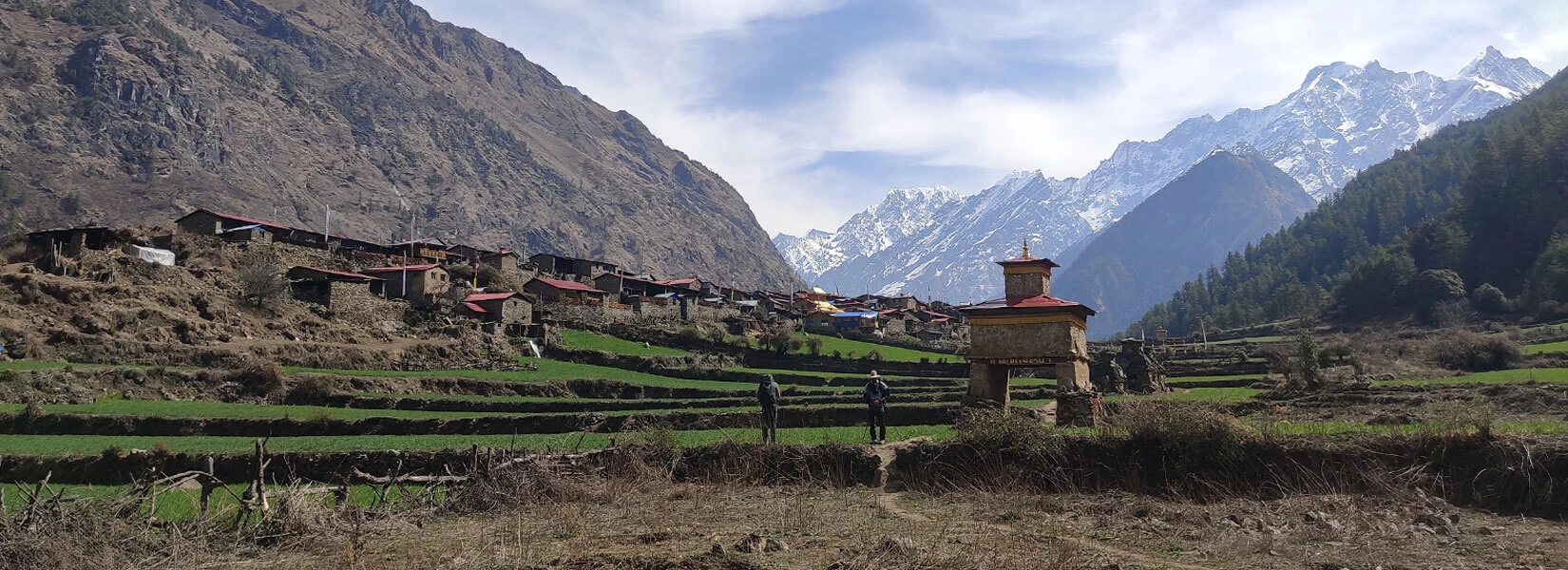
Sherpa society is built on cooperation, tradition, and deeply rooted social roles. Every title, festival, and responsibility serves a purpose maintaining harmony between people, land, religion, and nature. From village governance to forest protection, these systems reflect a community that values collective order over individual power. Let’s break down how this structure works.
The Sherpa Village
The village of the Sherpas functions as a community of families often linked by blood. You see strong collective action here. The community preserves natural resources and maintains public order. It organizes social and religious events.
Clans
Clans consist of various lineages. These groups hold different levels of social importance. Status depends on the role the lineage played in the history of the village.
Dumjee
This annual festival centers on the gompa (monastery). It happens in summer when farm work and herding slow down. Sherpas and Sherpanis wear their finest clothes and jewelry.
Participants share communal meals called kalak.
Families take turns organizing this event.
The cost is high.
The organizer is called the lawa.
The Nauas
Two Nauas in each village manage the division of land between agriculture and livestock. Three or four village notables select them. They organize the Osho ceremony. This procession circles the arable land to create a magical barrier against evil spirits.
No one contests the decision of the assembly.
Nauas are undeniably close to those who select them. Khambas rarely receive this title.
The Nauas call a meeting named yül-thim. You decide here how far herds must keep from crops. You set fines for rule-breaking. You also decide the date to ban herds from the village.
The Nauas settle many disputes regarding crops and livestock. The position offers prestige but no financial profit.
The Shingos Nauas
These men protect the forests. A regular Naua serves for one year. A Shingo Naua serves for up to twelve years. They come from old Sherpa families. One person can hold both titles.
They monitor forbidden cutting zones.
They inspect family wood reserves to judge their size.
Offenders pay fines every year after the Osho festival. Minor offenders win forgiveness by donating beer to the assembly.
The tribunal ends joyfully with the help of the beer. Fines sometimes pay for a snack for the assembly.
Note that deforestation in the Khumbu increased when the central government took management away from the villages.
Chorumba
The chorumba acts as the lay official for the gompa. He maintains the building and enforces discipline during celebrations. He can inflict fines or whippings. You have no right to complain about his punishments. The job provides no payment.
The chorpen acts as the guardian of the ritual objects in the gompa.
Lawa Roles
A lawa prepares public ceremonies. You do not need to provide food for minor festivals. Your duty is to visit homes and collect contributions. This role rotates among villagers to share the tasks.
Pembu
Pembus worked as land tax collectors. Eight of them served the Solu-Khumbu region. They brought collected funds to the district once a year. Federalism has almost certainly changed this collection method.
This function offered advantages you could abuse.
Pembus received free labor days from their “clients.”
They seized assets of Sherpas who died without heirs.
They gave these assets to chosen individuals for a fee.
Some Pembus acted like village chiefs. They opposed the decisions of village notables or the Naua. They also possessed the power to purify people who became impure by drinking from the same cup as a Khamendeu.
Conclusion
The Sherpa social system is not accidental. Every role from the Naua to the chorumba exists to protect balance, land, tradition, and order. Authority here is communal, not individual. Prestige comes without profit. Responsibility outweighs power.
These structures explain why Sherpa villages functioned sustainably for generations and why disruption from outside governance altered that balance. Understanding these roles offers a deeper respect for how culture, environment, and leadership once worked as one.