

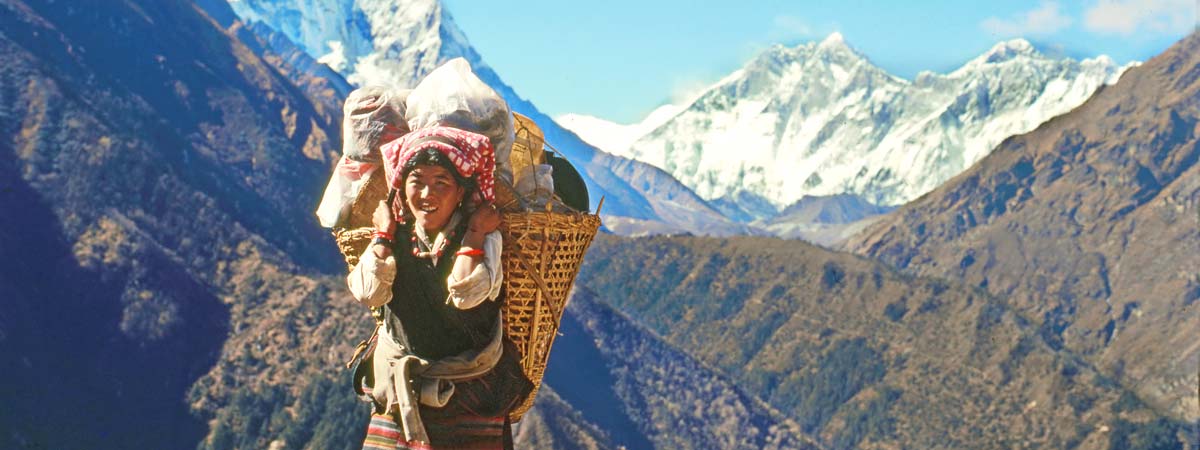
The Sherpas built their way of life in one of the toughest environments on earth. Their economy, shaped by altitude, climate, livestock, and cross-border trade, reflects both resilience and deep cultural tradition. What follows is a clear picture of how Sherpas farmed, herded, crafted, and traded forming an economic system uniquely adapted to the Himalayas.
Agricultural Challenges and Methods
Khumbu soil stays frozen for six months of the year. You must concentrate all farm work into the remaining six months. Crops include buckwheat, potatoes, turnips, and small vegetables. Men plow the fields for buckwheat.
They use a light wooden plow with an iron tip. Three or four men pull this plow. Sometimes a pair of yaks or zopkios do the work. Only four families possessed animal teams in 1957. A woman follows the plow to sow the buckwheat. Women work the potato fields with hoes.
Land Management and Demographics
Families own land at various altitudes. You must exploit different soil thawing dates. This requires constant movement between elevations. Khumjung village sees a three-week difference in potato planting dates across properties. The off-season is short. Khumbu contained 169 families in 1836. It had 596 families in 1957.
The introduction of the potato likely caused this population surge. Two hypotheses explain the potato’s arrival. It came from British gardens in Darjeeling. Or it came from the British resident’s garden in Kathmandu. Farmers in Pharak and Solu also grow wheat, winter barley, corn, and summer potatoes.
Livestock and Prestige
Yak raising is a noble activity for Sherpas. It brings prestige. Herd size defines this prestige. Livestock did not drive the population settlement of the Khumbu. Only 254 of 596 families owned yaks in 1957.
Only 17 of 108 families in Khumjung practiced seasonal migration. You drink little milk but enjoy curd. You use butter for food, lamps, and ritual figurines. Butter is also currency for trade with Tibet.
You Must Also Read: The Social Structure of The Sherpas
Yak Utility and Breeding
The yak provides leather from its skin. It provides ropes and blankets from its hair. Its blood serves as medicine. Its horns become containers. Its dung serves as fertilizer and fuel. You place the skull on your roof to ward off bad spirits. A yak carries 60kg. It has poor eyesight and dangerous horns. Buddhism forbids killing animals.
You eat meat from accidents or fights. Muslim butchers kill old animals. Profit comes from crossbreeding Tibetan yaks with cows. The female zhum yields more milk. The male zopkio makes a docile draft animal. Tibet and Solu have high demand for these hybrids. Sherpa herders live in stone and wood houses at high altitudes. This contrasts with other groups who live in tents.
Trade Economy
Agriculture and livestock did not create Sherpa wealth. Trade with Tibet did. This trade provides a standard of living superior to lower-altitude groups. The Nangpa La pass sits at nearly 6000m. This did not stop Sherpa enterprise.
You act as an intermediary. You move goods over glaciers between the south and Tibet. Salt and wool were the main imports from Tibet. Sherpas exported grain, butter, livestock, paper, skins, sugar, and Indian goods.
Commercial Structure
Rice and salt exchange rates varied by region. Small traders handled the rice-salt barter. Big merchants in Namche Bazar traded butter, sugar, cotton, and livestock. Two-thirds of Namche residents lived off trade in 1957.
Sherpa Craftsmanship
Khumbu has few professional artisans. You must handle domestic tasks yourself. Men spin wool using a spindle while walking. Women weave yak hair blankets on simple looms. They use a Tibetan pedal loom for wool. Itinerant bootmakers make boots in your home. These are often Tibetan immigrants.
Carpentry is honorable work. Farmers act as carpenters when needed. Sherpas view blacksmiths as Untouchables. You do not allow them into your home. They live apart from the village. The painter of monasteries receives high honor.
Conclusion
The traditional economy of the Sherpas is a blend of harsh geography, limited agricultural potential, and remarkable ingenuity. Farming, yak herding, craftsmanship, and high-altitude trade each played a role in shaping their identity. Yet the real engine of prosperity came from their ability to navigate difficult terrain and connect two worlds Tibet and the lowlands. Their economic system reflects endurance, adaptation, and a deep connection to the Himalayan environment.