

Trekking in Nepal During Monsoon: Here is what actually matters
- Nepal’s monsoon does not hit the entire country equally. Rain-shadow regions like Upper Mustang and Upper Dolpo stay dry and are best visited June through September.
- The popular routes, Everest Base Camp, Annapurna Circuit, and Langtang Valley, stay open and passable but offer fewer mountain views.
- Weather follows a daily pattern: clear mornings, rain in the afternoon. Start early and you largely avoid it.
- Lodges stay open. Trails stay walkable. Crowds disappear. Costs drop.
- Leeches are present below 2,500m but are manageable with basic gear.
- If you want mountain panoramas, avoid monsoon. If you want the trail to yourself with full green landscapes and lower prices, monsoon has a genuine case.
The standard advice on monsoon trekking in Nepal runs something like this: avoid June through September, book spring or autumn, and wait for the clear skies that everyone else is also waiting for. The advice is not wrong for the routes it applies to. It is incomplete for the routes it does not.
Nepal’s monsoon is a specific meteorological event, not a uniform blanket of bad weather across the entire country. Understanding where it hits hardest and where it does not reach changes the calculation considerably for trekkers with flexible schedules or a preference for trails that are not shared with a thousand other people.
Debunking the Main Monsoon Myths
The dominant myth is that Nepal is simply closed for trekking during the monsoon. This overstates the problem on the popular routes and misses the picture entirely on the rain-shadow routes.
Myth 1: Nepal is closed for trekking during the monsoon
The monsoon arrives from the Bay of Bengal and pushes northwest across the subcontinent. It saturates the southern slopes of the Himalaya, the middle hills, and the major river valleys running south from the high ranges. It does not cross the main Himalayan barrier in the same force. The regions north of the main range, Upper Mustang, Upper Dolpo, and the high valleys of the Tibetan plateau zone, sit in a rain shadow that the monsoon clouds cannot reach with any consistency. These areas receive less than 200 millimetres of rainfall annually regardless of season.
Myth 2: Monsoon trails are impassable
The second myth is that monsoon trails are impassable. The main trekking corridors on the Annapurna Circuit, Everest Base Camp route, and Langtang Valley have stone-paved sections, established drainage, and continuous lodge infrastructure. They become wet and occasionally muddy. They do not become rivers. A trekker with appropriate footwear and rain gear covers the same ground in June that they cover in October, more slowly on some sections and with fewer panoramic views, but the trail is there and functional.
Myth 3: Leeches make monsoon trekking intolerable
The third myth is that leeches make monsoon trekking intolerable. Leeches exist on forested lower-altitude sections during the monsoon. They are an inconvenience, not a health threat. A pair of gaiters and salt or a lighter handles them. Trekkers who find leeches genuinely distressing have a legitimate reason to avoid lower-altitude forested routes between June and September. Everyone else is managing an irritant, not a hazard.
What the Monsoon Actually Looks Like on the Trail
The monsoon pattern in Nepal is not continuous rain. It follows a diurnal cycle across most of the trekking season:
- Mornings: clear conditions
- Midday: cloud begins to build
- Afternoon and evening: rain arrives
- Following morning: conditions often return to reasonable
A trekker who starts at 5:00 am and covers the day’s distance by midday operates in a completely different experience from one who starts at 9:00 am and walks into the afternoon downpour.
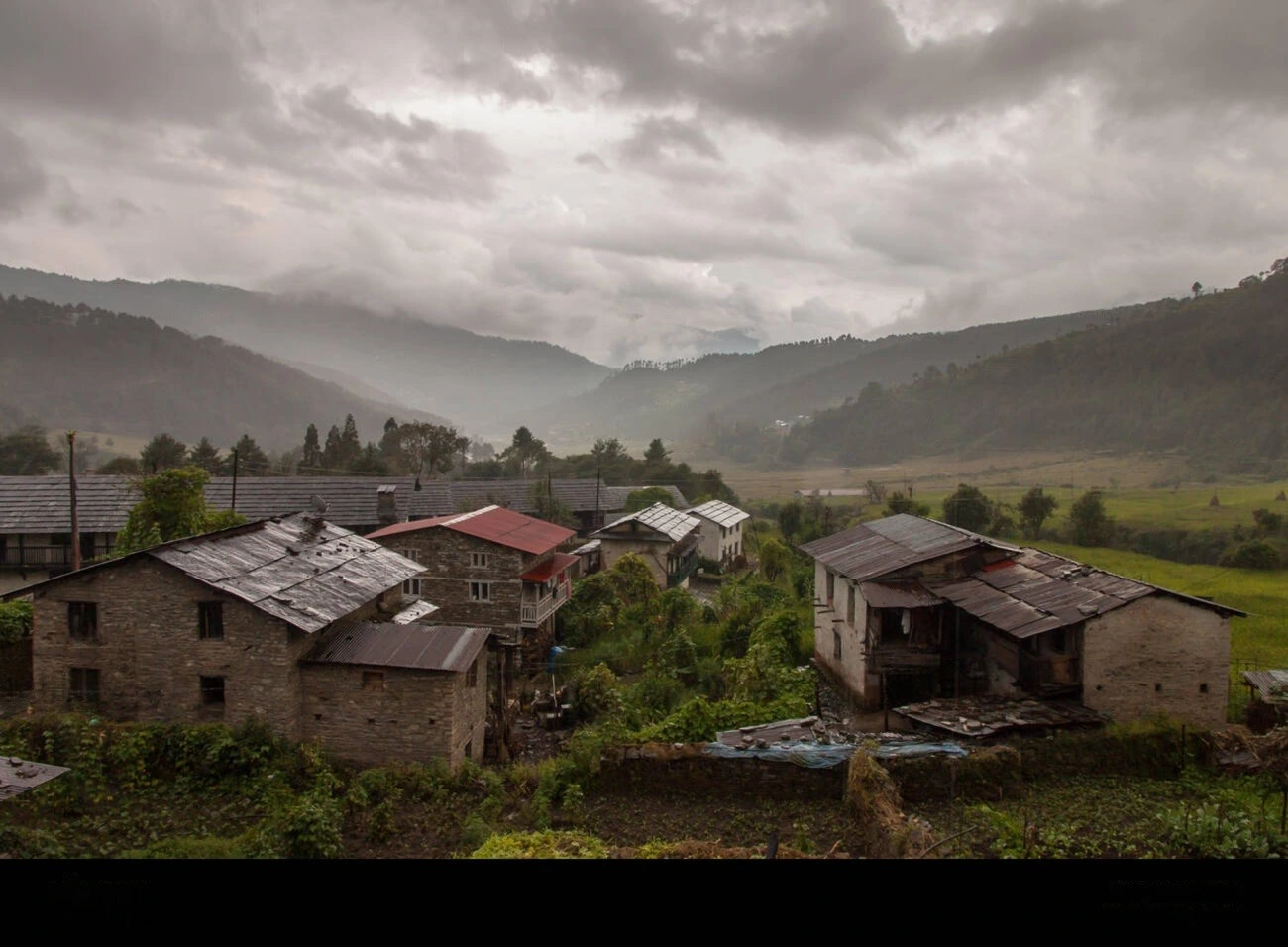
The lush landscape that the monsoon produces is the visual counterpart to the rain that creates it. The trails between June and September run through Nepal that the autumn and spring trekkers never see.
- Rhododendron forests that were bare in April are dense and green.
- Waterfalls appear on every hillside.
- The terraced fields are planted and actively growing.
- The smell of wet earth and vegetation at altitude is specific to this season and cannot be replicated in dry months.
Whether this aesthetic registers as a benefit or a consolation depends on the individual.
The lodges on major routes remain open during the monsoon. Tea house infrastructure on the Everest Base Camp trail, Annapurna Circuit, and Langtang Valley does not close in June. Occupancy drops significantly, which means better room availability, more attentive service from lodge owners who are genuinely pleased to see someone, and an atmosphere on the trail that is as close to solitude as these routes ever offer.
Mountain views are the honest casualty. Cloud cover during the monsoon limits the high-altitude panoramas that define the visual experience of the major routes. Some mornings are clear and the views arrive without warning. Most are not.
- A trekker whose primary objective is an unobstructed view of Everest from Kala Patthar should not trek in August.
- A trekker whose objectives include the experience of the trail, the lodges, the culture, and the landscape at a fraction of the peak season crowd level has a reasonable case for the monsoon.
The Rain-Shadow Routes: Where Monsoon Trekking Is Genuinely Better
Upper Mustang is the clearest case. The walled medieval city of Lo Manthang, the Tibetan Buddhist monasteries, the cliff-face cave dwellings at Chhoser, and the high-desert landscape of the Kali Gandaki rain shadow sit in conditions during the monsoon that are in some respects superior to autumn and spring. The crowds that build on Himalayan routes during peak season do not reach Upper Mustang at any time of year due to the restricted area permit system, and during the monsoon they are thinner still.
The winds that make the Kali Gandaki valley physically demanding in other seasons moderate during the monsoon months. The afternoon wind that drives experienced trekkers off the valley floor by midday in April is less consistent in July and August. The landscape, arid and ochre, does not change its character with the season the way the lower forested valleys do.
Upper Dolpo presents similar conditions for trekkers with the experience and logistics to reach it. The restricted area permit and the remoteness of the region mean that Upper Dolpo requires more planning and a higher budget than standard routes, but the monsoon is the optimal season to visit rather than a period to avoid.
Leeches, Lodges, and Lush Landscapes
Leeches inhabit the forested sections below approximately 2,500 metres during the monsoon. They are most concentrated in damp, shaded sections of trail through dense vegetation. On routes like the lower Annapurna Circuit approach, the forested sections of the Langtang Valley below Lama Hotel, and the lower Everest region below Namche Bazaar, leeches require active management. Tuck trousers into socks, wear gaiters, check regularly, and remove with salt or a lighter without squeezing. The time spent managing leeches on a typical monsoon trekking day is measured in minutes.
Lodge conditions during the monsoon vary more than during peak season because occupancy is lower and some lodge owners reduce staffing. The infrastructure is present and functional. The hot showers, the dal bhat, and the beds are available. The dining room ambiance of a lodge with forty trekkers filling it on an October evening is replaced by something quieter and more personal. For trekkers who find peak-season tea houses overwhelming, this is an improvement rather than a downgrade.
The landscape benefit is real and specific. Nepal in the monsoon is green in a way that photographs cannot fully capture. The lower valleys, the terraced farmland, the forested ridgelines, and the river systems running full and fast produce a visual register that the dry months, for all their clear skies and mountain views, do not match. Whether the trade of mountain views for landscape intensity is worthwhile is a preference question rather than an objective ranking.
The practical advantages of monsoon trekking are concrete. Permit availability on restricted routes is higher. Lodge availability on open routes is unrestricted. Trail traffic is a fraction of peak season. Flight and accommodation costs in Kathmandu and Pokhara are lower. These are not insignificant factors for trekkers whose schedules require flexibility or whose budgets respond to seasonal pricing.