

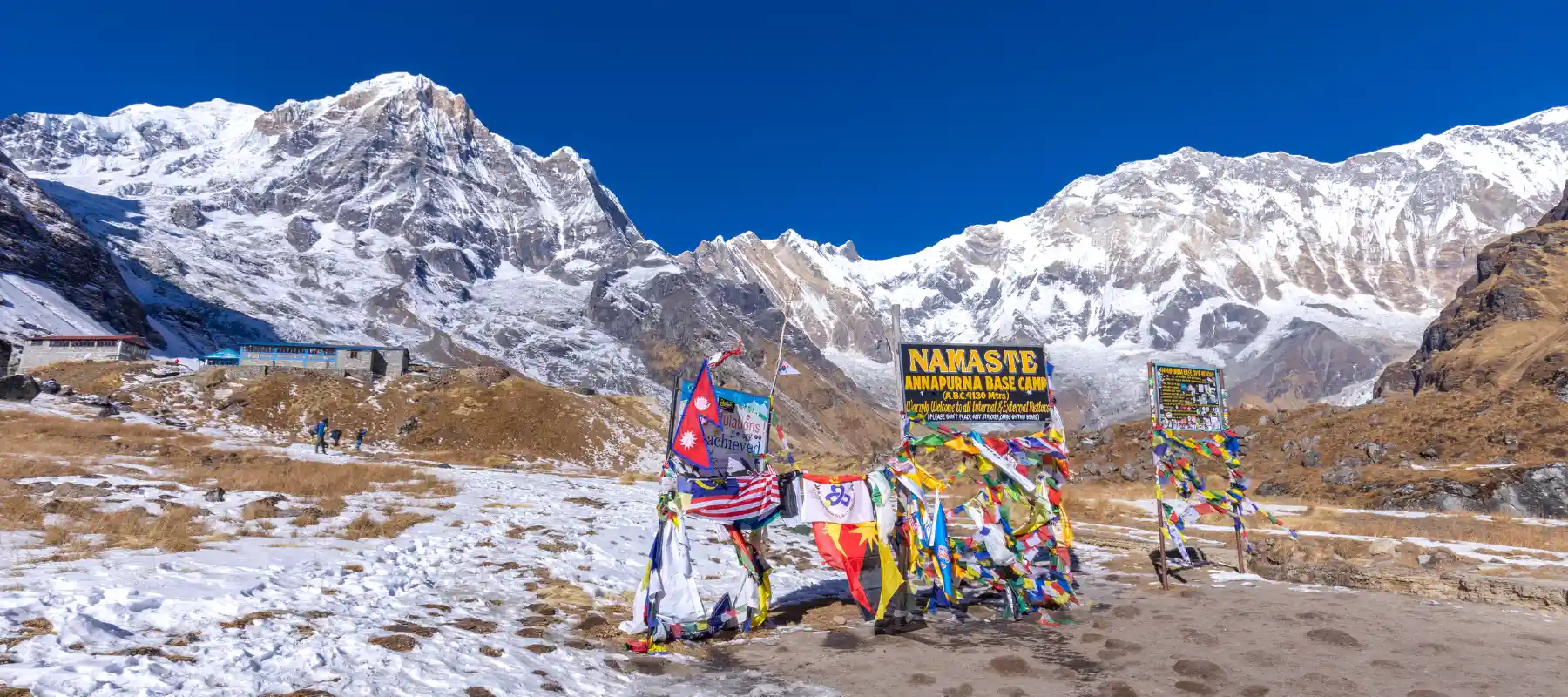
The Annapurna Sanctuary Trek functions as a primary introduction to Himalayan traverses. It sits within the Annapurna Conservation Area Project (ACAP) and offers a logistical and physiological baseline for high-altitude trekking. The route terminates at the Annapurna Base Camp (ABC), a glacial basin situated at 4,130 meters. This specific geography creates an amphitheater effect, surrounded by the Annapurna massif. Access to this region requires traversing the Modi Khola valley. The trek presents specific terrain characteristics, daily exertion requirements, and visual payoffs that define its reputation among novice trekkers with high fitness levels.
Terrain Characteristics and Topography
The topography of the Annapurna Sanctuary route consists of distinct elevation zones. The trail begins in lower temperate forests and ascends into sub-alpine and alpine zones. A defining feature of this specific route is the prevalence of stone staircases. Local communities constructed these steps over decades to facilitate trade and movement between villages such as Tikhedhunga, Ulleri, and Chhomrong. The ascent to Ulleri involves approximately 3,000 stone steps. This section provides an immediate audit of leg strength and cardiovascular endurance. The repetitive vertical gain on rigid surfaces places specific mechanical stress on knee joints and quadriceps.
Beyond the villages, the trail narrows. It follows the gorge cut by the Modi Khola river. The terrain here shifts from cultivated terraces to dense forests of bamboo and rhododendron. The path undulates significantly. Trekkers descend to the river bank only to ascend the opposing ridge. This sawtooth profile adds cumulative elevation gain that exceeds the net altitude difference between the start and end points.
The trail surface varies from packed earth and roots in the forest sections to loose scree and rock near the Machapuchare Base Camp (MBC) and ABC. Precipitation renders the stone sections slippery. The route requires careful foot placement. Traction aids become necessary in icy conditions, particularly during early spring or late autumn traverses.
Daily Exertion
Standard itineraries for the Annapurna Sanctuary allot between five and seven hours of walking per day. This duration accounts for the vertical gain rather than linear distance. Kilometers cover less ground in the Himalayas than on flat terrain. A typical day begins at 07:00 or 08:00. The pace remains steady. Rapid ascent increases the risk of Acute Mountain Sickness (AMS). Guides enforce a rhythm that keeps heart rates manageable. The daily objective involves reaching the next tea house before afternoon weather systems move in.
The trekking duration fluctuates based on the specific segment. The leg from Chhomrong to Dovan might take five hours, while the push from Deurali to ABC can take less time but requires more effort due to the thinning air. Oxygen saturation drops as altitude increases. The body compensates by increasing respiration and heart rate. Walking at 3,000 meters feels significantly different from walking at sea level.
The five to seven-hour window includes breaks for hydration and meals. It excludes photo stops or prolonged rests. This timeframe assumes a baseline fitness level capable of sustained aerobic output.
Annapurna Base Camp Bowl Experience
The destination of the trek is the Sanctuary itself. This geological feature is a high glacial basin. A ring of peaks encircles it. The entrance to the Sanctuary is a narrow gorge between Hiunchuli and Machapuchare. Once inside, the valley widens. The resulting bowl offers a 360-degree panorama of the Annapurna range.
The principal peaks visible include Annapurna I (8,091 meters), Annapurna South (7,219 meters), Hiunchuli (6,441 meters), and Machapuchare (6,993 meters). The sheer vertical relief from the glacier floor to the summit of Annapurna I creates a sense of scale difficult to replicate in other mountain ranges.
This location serves as the base for mountaineering expeditions targeting the Annapurna face. Trekkers stand on the moraine of the South Annapurna Glacier. The environment is sterile and alpine. Vegetation is sparse. The focus remains entirely on the rock and ice walls. Sunrise illuminates the peaks in sequence. The sun hits the summit of Annapurna I first, then descends the face. This light progression draws photographers and observers.
The acoustic environment within the bowl differs from the valley. The wind sound changes. Avalanches on the surrounding faces create audible cracks and rumbles that echo within the amphitheater. The experience provides a direct observation of active geological processes.
Suitability for Fit Beginners
The classification of this trek as suitable for beginners refers to technical difficulty, not physical exertion. The route requires no mountaineering skills. Crampons, ice axes, and ropes remain unnecessary for the standard trekking path. The trail is well-defined. Logistics are established. Tea houses provide accommodation and food, eliminating the need for camping gear. This infrastructure reduces the pack weight for individual trekkers.
However, the “fit” qualifier is non-negotiable. The physical demand rivals that of more remote treks. The cumulative elevation gain tests endurance. Beginners must possess cardiovascular health capable of sustaining activity for multiple days. Leg strength supports the knees during long descents. Core strength stabilizes the body on uneven ground. Prior hiking experience aids in gear selection and pacing but is not strictly required. The primary barrier to entry is physical conditioning. Mental resilience also plays a role. The accommodations are basic. Heating is limited to communal dining areas. Hot showers are variable. A beginner prepared for physical discomfort and sustained effort will succeed. A beginner expecting a leisure walk will not.
Route Logistics and Specific Itinerary Points
The trek typically commences from Nayapul or Phedi, accessible by vehicle from Pokhara. The route creates a loop in the lower sections before entering the single track to the Sanctuary. Ghandruk serves as a major cultural waypoint. This Gurung village houses the ACAP headquarters and offers views of Machapuchare and Annapurna South. The architecture utilizes local slate and stone. The museum in Ghandruk provides context on the local culture and history.
Chhomrong acts as the gateway to the Sanctuary. It sits on a ridge. The trail drops down a massive stone staircase to the Chhomrong Khola, crosses a suspension bridge, and immediately ascends to Sinuwa. This section is often cited as the most physically taxing due to the loss and regain of elevation. Beyond Sinuwa, the trail enters the bamboo forests. The vegetation density increases. Langur monkeys inhabit this zone. The path continues through Bamboo and Dovan.
Deurali marks the transition to the alpine zone. Trees disappear. The valley opens up. The risk of avalanche increases in this section during heavy snow years. The trail hugs the side of the cliff. Trekkers pass the Machapuchare Base Camp first. MBC is not a base camp for summit attempts on Machapuchare, as the peak remains off-limits to climbers due to its religious significance. MBC serves as an acclimatization point and a tea house cluster. The final push to ABC takes approximately two hours from MBC. The gradient eases. The altitude becomes the primary obstacle.
Flora and Fauna
The route traverses distinct ecological zones. The lower elevation supports broadleaf forests. Oaks and maples dominate. As elevation increases, rhododendrons take over. Spring treks coincide with the rhododendron bloom. The forests turn red, pink, and white. This botanical event draws significant tourist volume. The bamboo zone supports specific wildlife. Red pandas inhabit the region but are rarely seen. Himalayan Thar and Musk Deer appear on the slopes above the tree line. The Danphe, Nepal’s national bird, resides in the high-altitude shrubbery.
The transition to the alpine zone brings hardy grasses and small flowering plants. The growing season is short. These plants maximize solar intake. The stark contrast between the lush lower valleys and the barren upper sanctuary defines the visual progression of the trek.
Seasonal Factors
Weather patterns in the Annapurna region follow the monsoon cycle. The pre-monsoon spring season offers stable temperatures. Days are warm. Nights are cool. Visibility is generally good in the mornings, with cloud cover building in the afternoons. The post-monsoon autumn season provides the clearest skies. The air is crisp. Visibility extends for miles. Winter brings snow and cold temperatures. The trail becomes hazardous due to ice. Summer brings the monsoon rains. Leeches infest the lower trails. Landslides become a risk.
Spring 2026 presents specific dates for traversal. Glacier Safari Treks has scheduled departures. The push dates are March 17, April 13, and April 20. These dates align with the optimal pre-monsoon window. The temperatures at ABC will be below freezing at night but manageable during the day. The rhododendrons will be in various stages of bloom depending on the elevation.
Physiological Effects of Altitude
The altitude at ABC (4,130m) is sufficient to induce AMS. Symptoms include headache, nausea, and fatigue. The itinerary mitigates this through gradual ascent. The body requires time to produce more red blood cells. Hydration aids this process. Alcohol hinders it. Acetazolamide (Diamox) is a common prophylactic. It acidifies the blood to stimulate breathing. It is not a cure. Descent is the only cure for severe AMS. Guides monitor blood oxygen levels. A saturation level below a certain threshold necessitates a halt or descent.
The physical sensation of altitude involves shortness of breath. Simple tasks like tying shoelaces require effort. Sleep quality deteriorates. Cheyne-Stokes respiration may occur during sleep. This involves periods of deep breathing followed by apnea. It is a normal physiological response to altitude but can be alarming. Understanding these mechanisms reduces anxiety.
Preparation and Gear
Gear selection focuses on layering. Base layers manage moisture. Mid-layers provide insulation. Outer layers offer protection from wind and precipitation. A down jacket is essential for the evenings at ABC. Boots must be broken in prior to the trek. Blisters end treks. Trekking poles reduce the load on the knees during the descent. They effectively transfer weight to the upper body. A sleeping bag rated for negative temperatures is required. The tea house blankets are often insufficient.
Water purification is critical. Plastic bottles are banned in the sanctuary to reduce waste. Trekkers use filtration systems or chemical tablets. Food in the tea houses is carbohydrate-heavy. Dal Bhat (rice and lentils) is the standard meal. It provides the necessary fuel for sustained hiking. Garlic soup is a local remedy believed to aid acclimatization. Its efficacy is anecdotal, but the hydration it provides is factual.
Economic and Social Context
The trek supports the local economy. The tea houses are family-run businesses. Porters transport supplies up the valley. The reliance on tourism is high. The 2015 earthquake and the COVID-19 pandemic disrupted this revenue stream. The return of trekkers injects capital into the villages. This economic exchange funds schools and infrastructure. Trekkers navigate a working landscape. Mules transport gas canisters and food. The trail is a commercial artery.
The culture is predominantly Gurung and Magar. These ethnic groups have a history of service in Gurkha regiments. The hospitality is professional and efficient. The interaction between trekker and host is transactional but cordial. Respect for local customs, such as removing shoes before entering dining halls or religious sites, is expected.
Comparing with other Treks
Compared to the Everest Base Camp (EBC) trek, the Annapurna Sanctuary trek is shorter. EBC requires a flight to Lukla. ABC starts with a drive. The altitude at ABC is lower than EBC (5,364m). The risk of severe altitude sickness is statistically lower on the ABC trek. The terrain in the Annapurna region is steeper. The valleys are narrower. The EBC trek spends more time in the high alpine zone.
The Manaslu Circuit Trek offers a more remote experience but requires a special permit and takes longer. The Poon Hill trek is shorter and stays at a lower elevation but does not reach the high glacial basin. The Annapurna Sanctuary occupies a middle ground. It offers high mountain views without the extended duration or extreme altitude of EBC.
Risk Management
The primary risks involve weather, altitude, and injury. Weather in the mountains changes rapidly. A clear morning can turn into a whiteout by noon. Guides carry communication devices. Evacuation by helicopter is available for medical emergencies. Insurance must cover helicopter rescue up to 6,000 meters. Trail injuries usually involve sprained ankles or knee issues. The stone steps are unforgiving. Evacuation by horse is possible from lower elevations but not from the Sanctuary itself. Landslides are a localized risk. Areas prone to rockfall are marked. Quick movement through these zones is advised.
The Trail Experience Day by Day
The trek begins with the sensory overload of the lower valleys. The sound of the river is constant. The humidity is high. As the trail climbs, the air dries. The silence of the high mountains replaces the river noise. The arrival at Machapuchare Base Camp signals the final phase. The peaks loom overhead. The walk to ABC is a victory lap. The gradient is gentle. The destination is visible. The arrival at the signpost marking 4,130 meters provides a tangible conclusion to the effort.
The return journey retraces the steps. The descent is faster but harder on the muscles. The knees absorb the impact. The lower oxygen levels are left behind. The air feels thick and rich at Chhomrong. The final descent to the road head signals the return to urban amenities. The shower in Pokhara removes the dust from the trail.
Spring 2026 Promo Details
Glacier Safari Treks organizes logistics for the Spring 2026 season. The focus is on the dates of March 17, April 13, and April 20. These departures maximize the weather window. The package includes permits, guides, porters, and accommodation. The itinerary is fixed to ensure safety and acclimatization. The group size is managed to minimize impact.
Conclusion
The Annapurna Sanctuary Trek validates its status as a classic. It delivers a high-altitude experience within a manageable timeframe. The terrain challenges the body. The views reward the effort. It is an efficient route to the heart of the Himalayas. It requires fitness, preparation, and respect for the environment. It does not require technical skills. It is accessible to the fit beginner.
Booking for the Spring 2026 dates now!