

Table of Contents
The Annapurna Circuit is one of the most famous treks in the world, and it’s also one of the questions we get asked the most: can a beginner do Annapurna Circuit? The short answer is yes, with the right preparation, the right pace and a good guide. This guide covers what the trek involves, how hard it really is, how long it takes, and what you need to know before you book, including notes for our French trekkers.
What is the Annapurna Circuit Trek?
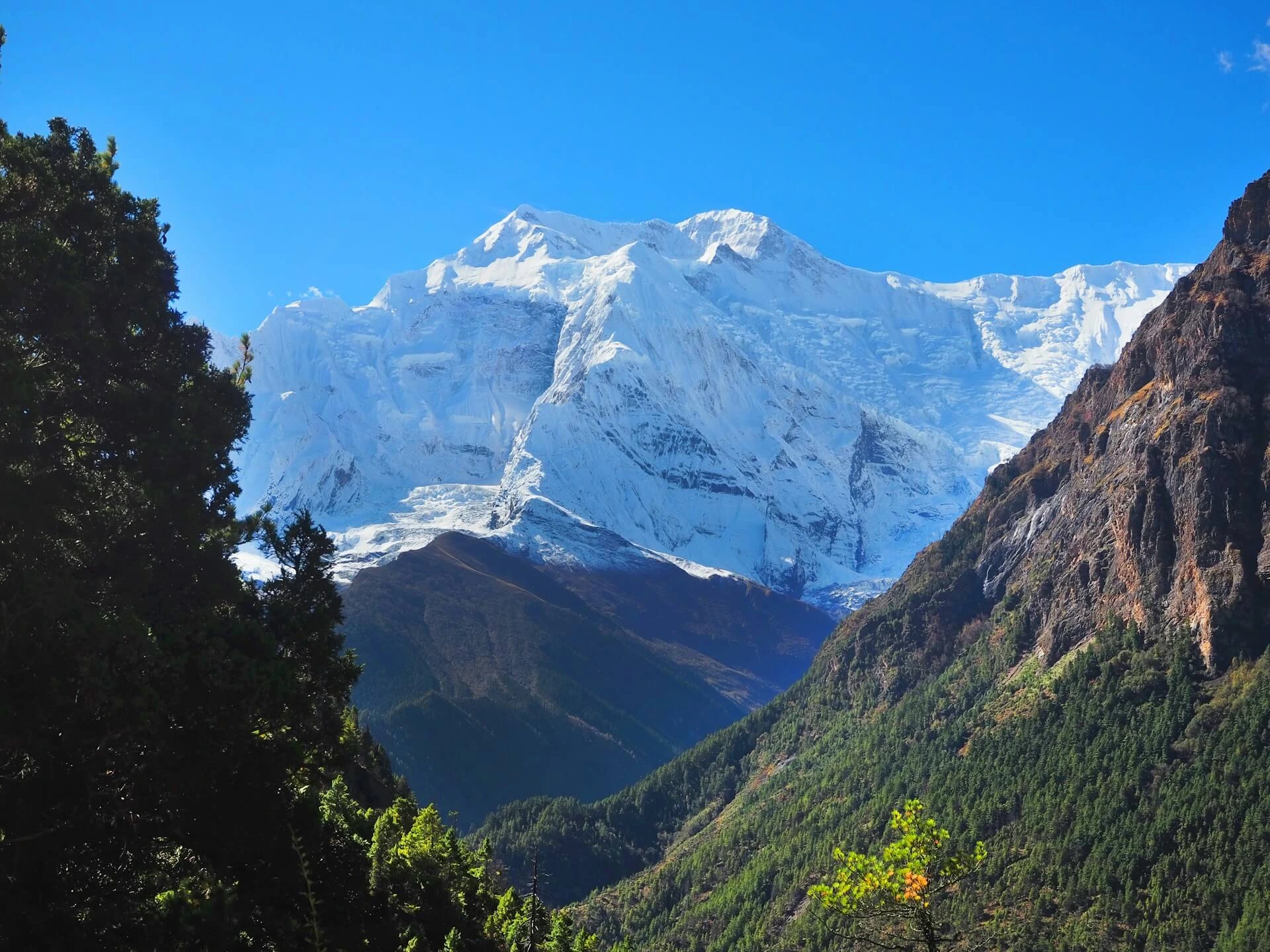
The Annapurna Circuit is a long trek that loops around the Annapurna mountain range in central Nepal. It starts near Besisahar, climbs up through the Marsyangdi valley, crosses the Thorong La Pass at 5,416m, then drops down through Mustang and the Kali Gandaki Gorge before finishing near Pokhara or looping back through Ghorepani and Poon Hill.
What makes this trek special is the variety. In one journey you pass through:
- Lowland villages and terraced fields
- Dense pine and rhododendron forests
- High alpine valleys like Manang
- Dry, desert-like landscapes around Mustang
- Buddhist monasteries and Hindu pilgrimage sites like Muktinath
You will also walk through several different ethnic communities, including Gurung, Manangi and Thakali villages, each with its own architecture, food and customs. Few treks in the world pack in this much change in scenery and culture over a single route.
Can you do the Annapurna Circuit on your own?
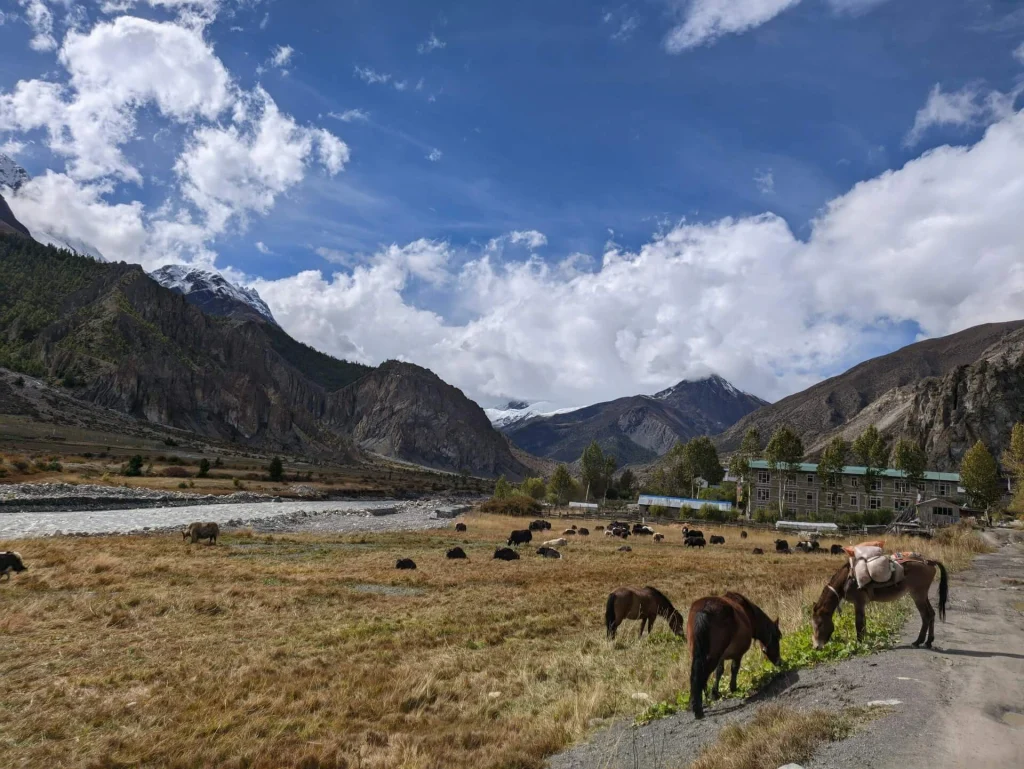
This is where things have changed. Since April 2023, Nepal requires all foreign trekkers to hike with a licensed guide on most trekking routes, including the Annapurna region. This rule was brought in after a rise in cases of solo trekkers getting lost or injured with no one to help them. You can no longer get a TIMS card as an independent trekker for this route. It has to be issued through a registered trekking company with a named guide attached.
In practice, this means:
- You cannot plan and walk the Annapurna Circuit completely alone anymore
- You need to book with a trekking agency or hire a licensed guide directly
- Your guide’s name goes on your TIMS card and permits
Even before this rule came in, most experienced trekkers recommended going with a guide on the Annapurna Circuit anyway, simply because of the altitude, the pass crossing and the length of the route. Now it is a legal requirement, and honestly, it removes a lot of the guesswork for a first-time trekker.
How difficult is the Annapurna Circuit?
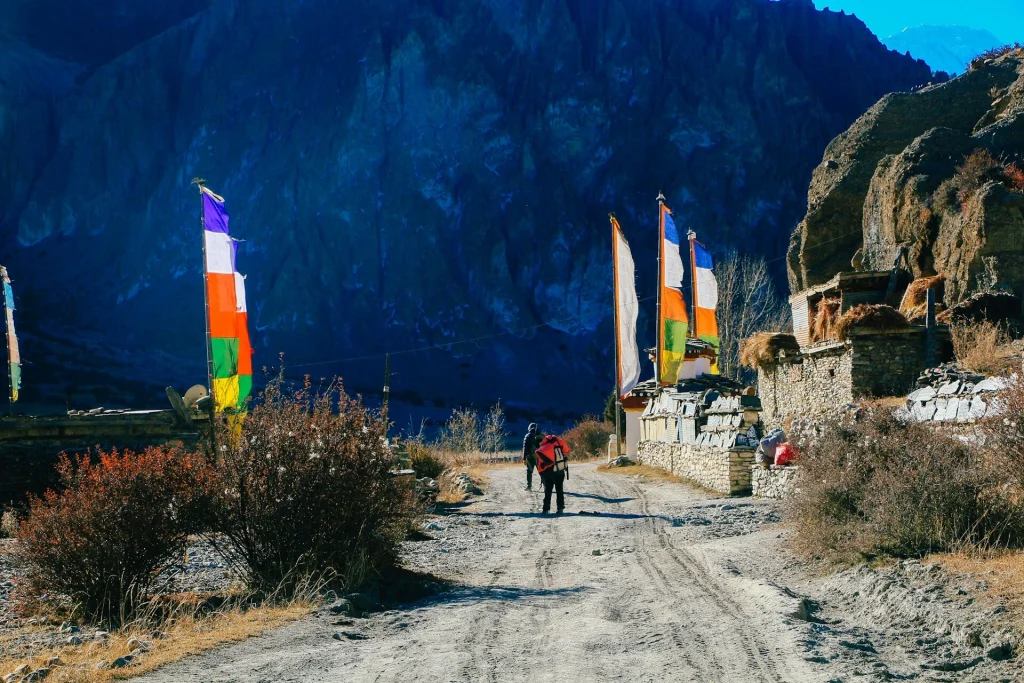
The Annapurna Circuit is rated as a hard trek, but “hard” needs some explanation, because it doesn’t mean technical climbing or scrambling. It means:
- Long trekking days. Most days involve 4 to 7 hours of walking, and a couple of days go up to 8 to 12 hours, particularly the day you cross Thorong La Pass.
- High altitude. You reach 5,416m at the pass, which is high enough that altitude sickness is a real risk if you rush the climb.
- Changing terrain. You will walk on forest trails, riverbeds, stone staircases and exposed mountain paths.
- Basic accommodation. You stay in teahouses along the route. Rooms are simple, and hot showers or good wifi are not guaranteed at higher altitudes.
None of this requires previous mountaineering experience. It requires a reasonable level of fitness, the patience to walk slowly at altitude, and the ability to handle several days of physical effort in a row. Most healthy adults who prepare properly can do it.
Why the Annapurna Circuit is considered beginner friendly
Compared to other big treks in Nepal, the Annapurna Circuit has a few things going for it that make it a realistic first big trek:
- Gradual altitude gain. Unlike some routes that climb fast, the Annapurna Circuit builds up over many days, with rest and acclimatisation days built in, like the day in Manang at 3,800m.
- Good infrastructure. The trail is dotted with teahouses, so you are never far from a bed, a hot meal or basic supplies.
- No technical climbing. You are walking the entire way. There are no ropes, crampons or climbing skills needed.
- Guides handle the hard part. A good guide manages your pace, watches for signs of altitude sickness, and plans rest stops so you are not pushing your body past what it can handle.
- You can choose your route length. Shorter versions of the circuit exist, so you can pick a trip that suits your fitness and time rather than the full classic loop.
- Varied difficulty by day. Some days are genuinely easy, gentle walking through villages and forest. The hard days are concentrated around the pass crossing, so you are not maxed out every single day.
If you can walk 5 to 6 hours on uneven ground, on and off, for several days, and you’re willing to train a little beforehand, this trek is within reach even if you’ve never trekked in the mountains before.
How long does it take to do the Annapurna Circuit?
The full Annapurna Circuit usually takes between 12 and 18 days, depending on the exact route, how many rest days you build in, and whether you add extensions like Tilicho Lake. A common structure looks like this:
- Days 1-6: Travel from Kathmandu to Besisahar, then trek up through Dharapani, Chame, Pisang and Gyaru to Manang, with a rest day for acclimatisation
- Days 7-9: Push higher to Ledar and Thorong Phedi, then cross Thorong La Pass and descend to Muktinath and Jharkot
- Days 10-13: Walk down through Mustang and the Kali Gandaki Gorge, passing Thakali villages, apple orchards and hot springs at Tatopani
- Days 14-16: Climb to Ghorepani, catch sunrise at Poon Hill, then descend to Birethanti and return to Kathmandu
Shorter versions, around 11 days, skip some of the side trails and move a bit faster, while longer versions add extra acclimatisation time or detours like Tilicho Lake, the highest lake of its size in the world.
Do you need a guide to hike the Annapurna Circuit?
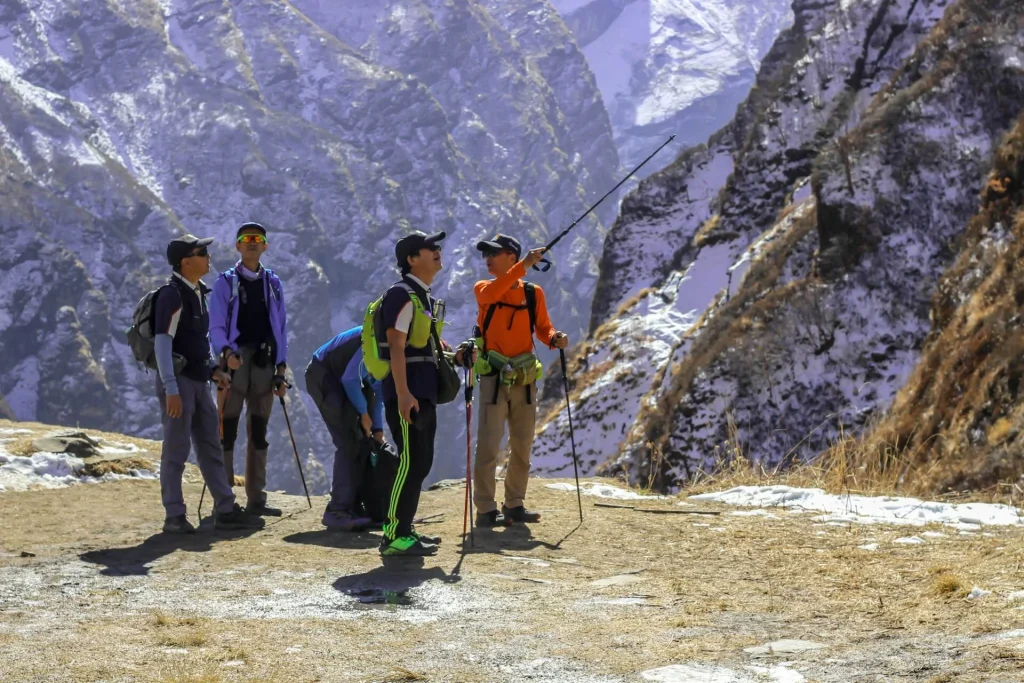
Yes, as of the current rules, a licensed guide is required for foreign trekkers on the Annapurna Circuit. Beyond the legal requirement, there are real practical reasons to trek with one:
- Safety at altitude. A trained guide recognises the early signs of altitude sickness and knows when to slow down, rest, or turn back.
- Local knowledge. Guides know the trail conditions, weather patterns and the best places to eat and sleep along the way.
- Cultural insight. They can explain the customs, monasteries and traditions of the communities you pass through, which adds a lot to the experience.
- Less admin for you. Permits, TIMS registration and route planning are handled for you.
- Support if something goes wrong. From a twisted ankle to a sudden change in weather, having someone experienced with you makes a real difference.
At Glacier Safari Treks, our guides come from various regions of Nepal and bring real local knowledge to the trail, not just route directions. They speak fluent English, many speak French, and they’ve trained to European standards, including mountain rescue and altitude sickness management through IFREMMONT. Most have 10 to 20 years of experience on these exact trails.
Information for French trekkers
The Annapurna Circuit is a popular choice for trekkers from France, and Glacier Safari Treks works with several French travel partners, including Nomade Aventure, La Balaguère, Comptoir des Voyages and Routes du Monde. Here’s what French trekkers should know:
- French-speaking guides are available. We can arrange a French-speaking guide for your trek, particularly useful if English isn’t your first language or you simply prefer trekking in French.
- Visa. French citizens need a visa to enter Nepal, available on arrival at Kathmandu airport or in advance through the Department of Immigration. Your passport needs at least six months’ validity from your arrival date.
- Group and private options. We run small confirmed group departures, generally around 10 travellers, as well as private and custom treks if you’d rather go at your own pace or on your own dates.
- Deluxe upgrades. If you want extra comfort, we offer upgrades including a flight to Pokhara instead of a long road journey, private vehicle transfers, and hotel stays in Kathmandu before and after the trek.
Getting ready for your trek
A few practical steps help any beginner prepare well:
- Build up your walking fitness in the months before you go, ideally with some hill walking or stair climbing
- Break in your hiking boots before you arrive, not on day one of the trek
- Pack layers, since temperatures swing widely between the lowlands and the high pass
- Get proper travel insurance that covers trekking at altitude and emergency evacuation
- Give yourself extra buffer days in your travel schedule in case weather delays the trek
Reach out to the team for booking treks in Nepal
If you’re thinking about the Annapurna Circuit, or you’re not sure which trek suits your fitness level and time frame, the Glacier Safari Treks team in Kathmandu is ready to help. We can talk you through route options, put together a custom itinerary, arrange a French-speaking guide, and handle all your permits and TIMS registration.
Get in touch through our contact page or send an inquiry for the trek you’re interested in, and our team will get back to you quickly with everything you need to plan your trip.
FAQs on Beginners Annapurna Circuit Trek
1. Can a complete beginner do the Annapurna Circuit?
Yes, most healthy adults with reasonable fitness can complete it. You don’t need previous trekking or mountaineering experience. What matters more is training beforehand, pacing yourself at altitude, and trekking with an experienced guide who can manage the harder days.
2. Is it legal to trek the Annapurna Circuit without a guide?
No. From April 2023, foreign trekkers are required to hike with a licensed guide on the Annapurna Circuit and most other major trekking routes in Nepal. TIMS cards are only issued through registered trekking companies with a named guide attached.
3. What is the hardest part of the Annapurna Circuit?
The crossing of Thorong La Pass at 5,416m is the most demanding day, both because of the altitude and the length of the walk, which can run 8 to 12 hours. Good acclimatisation in the days before the crossing makes a big difference.
4. How fit do I need to be for this trek?
You should be able to walk 5 to 6 hours on uneven terrain, several days in a row. Regular walking, hiking or cardio training in the months before your trip will help a lot. You don’t need elite fitness, just consistent preparation.
5. When is the best time of year to trek the Annapurna Circuit?
Spring (March to May) and autumn (September to November) are the best seasons, with clearer skies, stable weather and good visibility of the mountains. Winter brings heavy snow at the pass, and the monsoon season brings rain and poor visibility.