

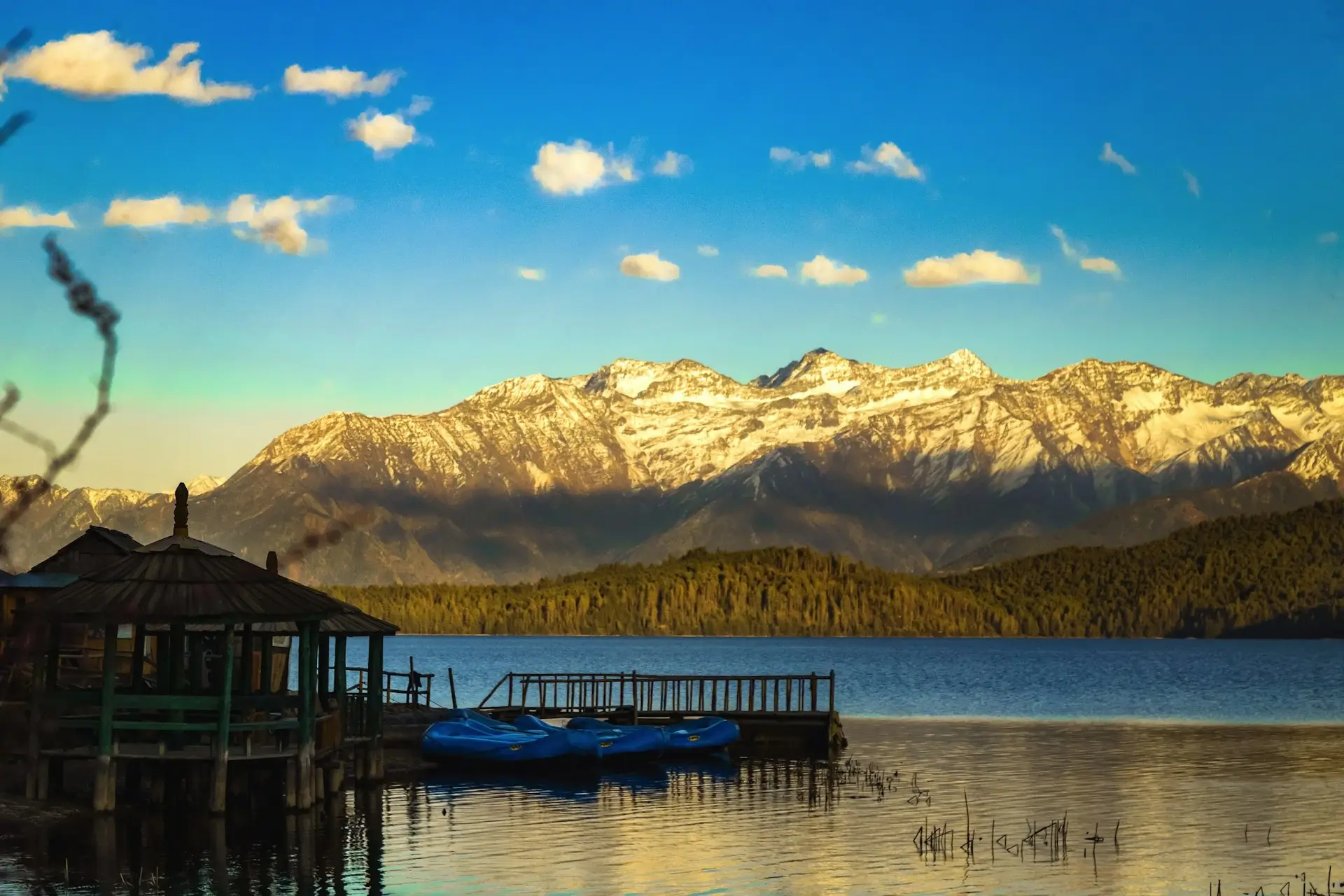
Most trekkers who visit Nepal head to the Everest region or the Annapurna circuit. A much smaller number head west. And of those, only a fraction push all the way into the Karnali and Mugu districts, where Nepal’s far west opens into landscapes that have changed little in centuries. Rara Lake sits at the heart of this territory, and the journey to reach it is as much of a point as the destination itself.
Nepal’s largest freshwater lake is not accessible by road. It does not have the infrastructure that the main trekking corridors carry. Getting there requires multiple domestic flights and ten days of serious walking through one of the most ethnically and geographically distinct parts of the country. For trekkers who have done the main routes and want something genuinely different, the Far West Nepal Trek with Glacier Safari Treks is the itinerary that delivers it.
Short Summary: Rara Lake Trek Itinerary
- Rara Lake is Nepal’s largest freshwater lake, located in remote Mugu at 2,990m inside Rara National Park.
- The 16-day trek is a remote camping expedition with no teahouse infrastructure.
- Access requires two domestic flights: Kathmandu → Nepalgunj → Simikot.
- The route crosses Karnali gorge, high passes (up to 3,660m), and isolated western villages.
- Expect rare wildlife, including musk deer, black bear, and 214+ bird species.
- The trek is medium difficulty but requires strong fitness and prior trekking experience.
- Cultural encounters include Thakuri, Chhetri, and unique far-western ethnic communities.
- Not suitable for first-time trekkers due to remoteness, logistics, and camping conditions.
Rara Lake: What It Is
Rara Lake sits in the Mugu district of Karnali Province at an altitude of 2,990 metres, enclosed within Rara National Park, Nepal’s smallest national park by area but one of its most ecologically intact. The lake is 5 kilometres long and 3 kilometres wide, reaching depths of 167 metres in the deepest sections. The water is extraordinarily clear, with visibility extending to significant depths, and its colour shifts across the day from deep blue to turquoise depending on the light and cloud conditions.
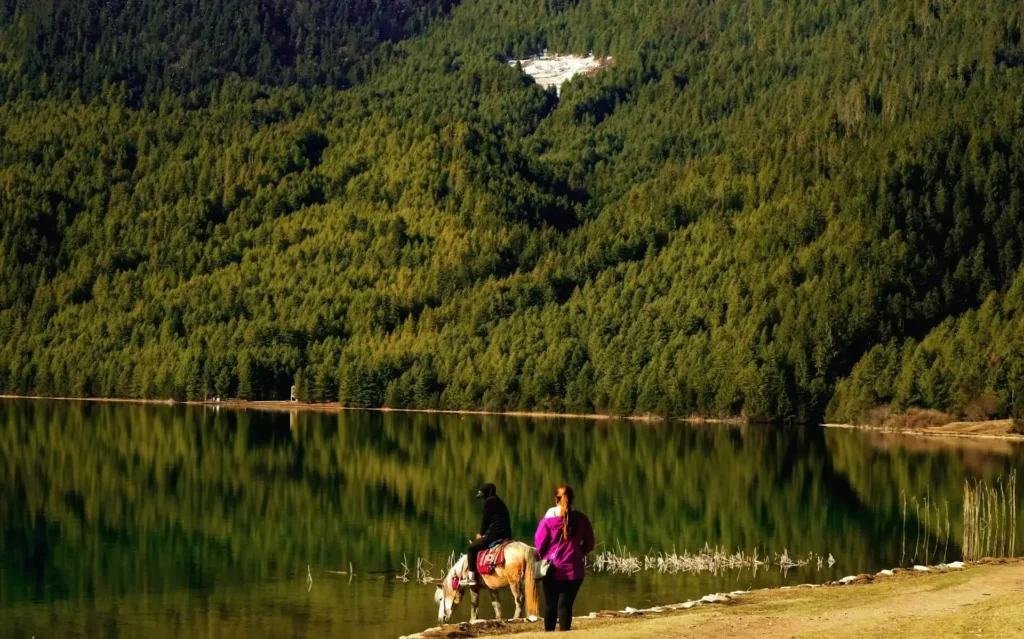
The lake is fed by several small rivers and streams from the surrounding hills and drains southward into the Karnali river system. The surrounding forest of pine, spruce, juniper, and rhododendron is dense and largely undisturbed, providing a quiet that the more visited parts of Nepal’s national park system no longer offer.
Fun Facts About Rara Lake
- Rara is the largest freshwater lake in Nepal, covering approximately 10.8 square kilometres
- The lake sits within Nepal’s smallest national park at just 106 square kilometres
- The water temperature remains cold year-round, averaging 10 to 12 degrees Celsius
- On clear nights at this altitude, the Milky Way is visible with a clarity that lower-elevation locations in Nepal cannot match
- The lake was historically known to local communities as Mahendra Tal before the national park was established
- Two villages, Rara and Chhapre, were relocated from inside the park boundaries when the national park was created in 1976, a history that sits in the cultural memory of the communities around the lake
Cultural and Spiritual Significance
For Nepali people, Rara Lake carries a reverence that goes beyond its natural beauty. The lake is considered a sacred site in the Hindu and local animist traditions of the surrounding communities. Annual festivals bring pilgrims from the surrounding Mugu and Humla districts to bathe in the lake’s water and make offerings at the lakeside shrines. The lake’s remoteness has preserved this spiritual character in a way that easier-access sacred sites in Nepal have not retained.
The forced relocation of the two villages from inside the park boundaries in the 1970s is a part of the lake’s history that local residents discuss openly. The communities were moved to the Terai lowlands at the government’s direction when the national park was established, and the displacement is remembered as a significant disruption to communities that had lived beside the lake for generations. Understanding this history provides context for the relationship between the park administration and the surrounding communities that a visitor encounters today.
The People Along the Trail: Thakuri, Raute, and Chhetri Communities
The Far West Nepal Trek passes through communities whose cultural distinctiveness is one of the primary reasons this route exists for the traveller who wants more than mountain scenery.
The Thakuri ethnic group dominates the far western hill districts. They are among Nepal’s traditional ruling caste groups in the region and have maintained cultural practices that distinguish them visually and socially from the hill communities of central Nepal. Women wear colourful pearl necklaces and distinctive jewellery. Men are often seen in white traditional woven garments. Village houses have interlocked flat roofs designed for the drier far western climate, which receives significantly less monsoon rainfall than central Nepal.
On the trail near Nassi, trekkers encounter Raute ethnic women known for their distinctive silver earrings with a diameter of approximately 10 centimetres and their colourful necklace traditions. The Raute are one of Nepal’s most distinct ethnic communities, and their presence along this route is one of the culturally singular aspects of far western trekking that no other part of Nepal replicates.
Chhetri village communities appear throughout the middle and lower sections of the route, living in the traditional house styles of the Karnali hill districts with agricultural terracing that follows the contours of steep hillsides. These communities maintain the domestic rhythms of far western Nepal, including the use of long-haired Himalayan goats as pack animals on the trade routes, which trekkers encounter as moving caravans on the narrower sections of the trail.
Wildlife in Rara National Park
Rara National Park’s small area and intact ecosystem support a biodiversity that is significant relative to its size.
Mammals present in the park include:
- Musk deer, whose musk glands make them a historically hunted species now protected within the park
- Himalayan black bear
- Common leopard
- Jackal and wild dog
- Red fox
- Various species of deer and smaller mammals
The birdlife at Rara is exceptional, with over 214 recorded species, including numerous migratory species that use the lake as a waypoint. The lake surface and surrounding wetland margins support waterfowl through the spring and autumn migration periods. The forest edge provides habitat for raptors and high-altitude specialist species that are not present on the more heavily trafficked trekking routes of central Nepal.
The 16-Day Far West Nepal Trek with GST: Itinerary Overview
The Glacier Safari Treks Far West Nepal Trek runs 16 days and operates as a tent camping expedition throughout, which reflects the absence of teahouse infrastructure on this route. The GST team provides cooks, assistants, personal tents, a mess tent, a toilet tent, mattresses, and kitchen utensils as part of the package.
The route begins with a flight from Kathmandu to Nepalganj, the main city of the western Terai, followed by a second domestic flight from Nepalganj to Simikot at 2,810 metres in the Humla district. From Simikot, the trek descends to the Karnali River and follows the gorge downstream through Bokche, Lipne, Nassi, and Deoli before crossing into the Mugu district via the Jogbari Pass at 3,660 metres.
Key Stages of the Trek
- Days 3 to 6: Following the Karnali River from Simikot through the gorge villages. The river changes colour through the day as the light shifts and the water carries varying sediment loads from its Tibetan headwaters. Caravans of mules and long-haired Himalayan goats travelling the traditional trade routes are a consistent feature of this section.
- Days 7 to 9: The approach to the Jogbari Pass through Bohara Bada and Jogimare. The pass at 3,660 metres marks the highest point of the trek and the border between the Humla and Mugu regions. Panoramic views of the Mugu Valley and the Mount Saipal range to the north open from the pass.
- Days 10 to 11: Descent through Gamgadhi, the headquarters of the Mugu district, and the final approach to Rara Lake at 2,980 metres. The arrival at the lakeside after ten days of walking through the gorges and passes is one of the more earned landscape moments in Nepal trekking.
- Day 12: The full southern shore of Rara Lake. A day of walking alongside the water through the juniper and pine forest that lines the southern shore, with the open water visible through the trees and the surrounding hills reflected in the lake’s surface.
- Days 13 to 15: The return route through Pina, Chauta, and Kali, crossing the Gucchi Pass at 3,330 metres before the final descent to Jumla at 2,380 metres.
- Day 16: Morning flight from Jumla to Nepalganj or Surkhet and connecting flight back to Kathmandu.
Practical Considerations for the Far West Trek
The Far West Nepal Trek is a committed undertaking. It requires comfortable, sustained walking across rugged terrain with significant daily elevation changes. The remoteness of the route means that logistical support outside the GST team structure is not available in the way it is on the main trekking corridors. The tent camping format means participants are not dependent on teahouse availability but need to be comfortable with the expedition-style setup that camping in remote Nepal involves.
The route is classified as medium difficulty, but the ruggedness of the far western trail network and the sustained multi-day nature of the journey mean good physical fitness and prior trekking experience are practical prerequisites.
Permits required include the Rara National Park Entry Permit and TIMS card. GST handles permit arrangement as part of the package.
Spring, from April to May and autumn, from September to November, are the best seasons. Spring brings rhododendron bloom in the lower forest sections and stable weather at the pass elevation. Autumn delivers clear skies and the sharpest mountain views after the monsoon.
Ask Our Team Directly
The GST team has direct experience on this route and can advise on the preparation, equipment, fitness level, and timing that make the difference between a challenging and rewarding journey and an underprepared one. Contact the team before booking to get the route-specific information you’re planning to require.
FAQs
1. How difficult is the Far West Nepal Trek to Rara Lake?
The trek is classified as medium difficulty. It involves sustained daily walking of five to seven hours on rugged, largely undeveloped trails with significant ascents and descents, including the Jogbari Pass at 3,660 metres and the Gucchi Pass at 3,330 metres. Good cardiovascular fitness and prior multi-day trekking experience are practical prerequisites. The absence of teahouse infrastructure means the expedition is self-contained, which requires comfort with tent camping conditions.
2. Why is Rara Lake significant to Nepali people?
Rara Lake holds both natural and cultural significance. It is Nepal’s largest freshwater lake and one of the most ecologically intact high-altitude lake environments in the country. For local communities in the Mugu and Humla districts, the lake carries spiritual significance in both Hindu and animist traditions, with annual pilgrimage festivals conducted at the lakeside. The history of the two villages relocated from inside the park boundaries when Rara National Park was established in 1976 adds a layer of cultural memory to the site that local residents are willing to share with respectful visitors.
3. What wildlife can I expect to see on the Far West Nepal Trek?
Rara National Park supports musk deer, Himalayan black bear, leopard, jackal, wild dog, and over 214 bird species, including significant migratory waterfowl on the lake surface. On the trail through the Karnali gorge section, long-haired Himalayan goats used as pack animals on the traditional trade routes are a consistent wildlife encounter. The park’s small area and intact ecosystem mean that wildlife density is relatively high compared to larger but more disturbed protected areas in Nepal.
4. How do I get to the start of the Far West Nepal Trek?
The route begins with a domestic flight from Kathmandu to Nepalganj, followed by a second flight from Nepalganj to Simikot in the Humla district. Both flights are included in the GST package price. Simikot is only accessible by air, which means weather conditions can affect departure schedules. Building flexibility into the itinerary around the domestic flight days is standard practice for this region.
5. Is the Far West Nepal Trek suitable for first-time trekkers in Nepal?
It is not the recommended starting point for first-time Nepal trekkers. The remoteness of the route, the absence of teahouse infrastructure, the significant daily elevation changes, and the multi-flight logistics into a genuinely remote region all require a level of physical preparedness and comfort with expedition conditions that most first-time trekkers have not yet developed. Trekkers who have completed a multi-day route in Nepal or another mountain environment and are comfortable with tent camping are much better positioned for this trek than complete first-timers.